What Happened At Cornell University 2026 Unfolding Legacy And Future Shifts
Cornell University stands at a crossroads in 2026 where its storied past collides with bold experiments shaping the future of higher education. Founded in 1865 on principles blending private ambition with public purpose, the Ivy League institution has consistently redefined academic boundaries—from pioneering elective systems to becoming a global hub for cutting-edge research. As the university prepares to mark another milestone, its trajectory reflects both the relentless march of innovation and the evolving tensions between tradition and transformation.
The year 2026 promises to be a defining chapter for Cornell, where advancements in artificial intelligence at Cornell Tech could redefine industry collaboration, while its medical and ornithology research centers tackle existential challenges like climate change and pandemics. Simultaneously, student demographics and campus culture are undergoing seismic shifts, with diversity initiatives, AI-driven dorms, and reimagined traditions reshaping daily life. Yet beneath the optimism lie speculative storms—controversies over free speech, ethical dilemmas in gene editing, and potential financial scandals that could test the university’s resilience. This is not just a snapshot of Cornell in 2026; it is a preview of how higher education itself may bend under pressure.

Historical Context of Cornell University: A Legacy Leading to 2026
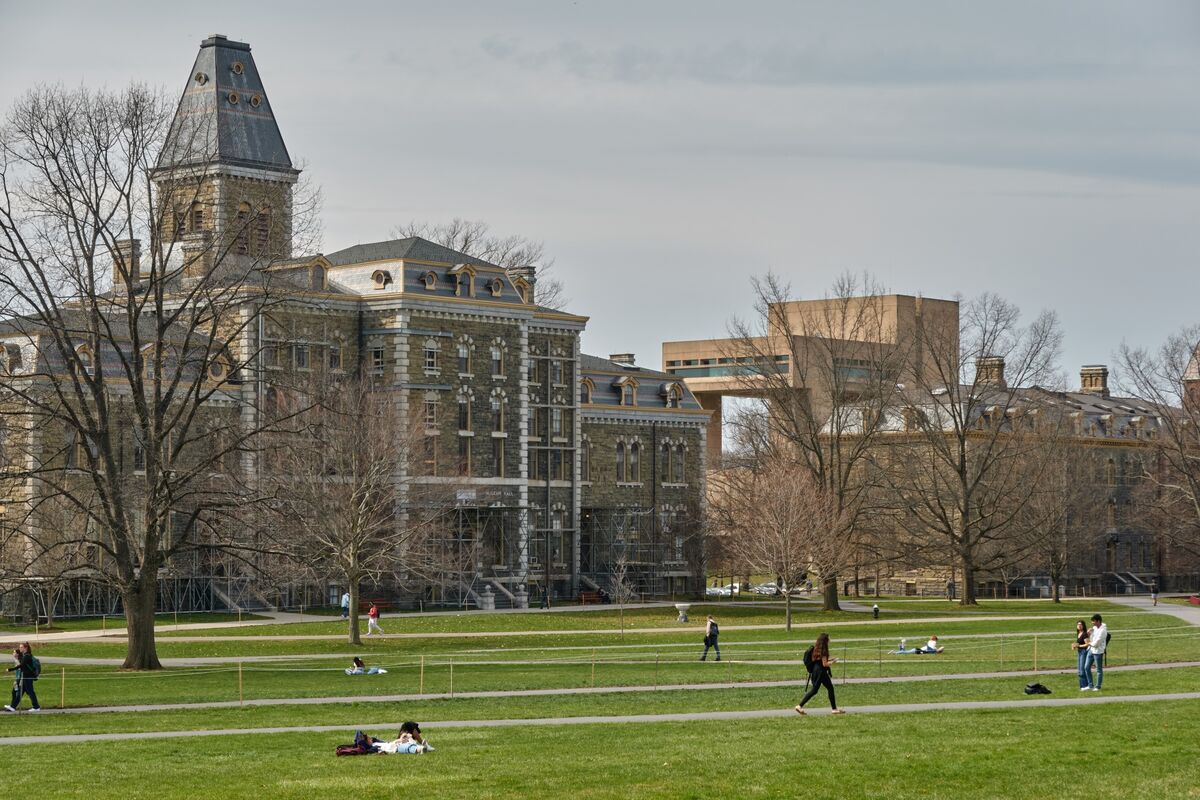
Cornell University, founded in 1865, emerged as a revolutionary institution in higher education by blending private philanthropy with public funding—a model that redefined academic accessibility and innovation. This fusion of resources allowed Cornell to challenge traditional elitism in education while fostering groundbreaking research and interdisciplinary studies. By the 2020s, Cornell’s legacy had solidified its reputation as a global leader, with its principles influencing modern academia, from elective-based learning to cutting-edge scientific advancements. The university’s evolution reflects broader shifts in higher education, positioning it uniquely among Ivy League peers like Harvard and MIT, each excelling in distinct domains while sharing a commitment to excellence.
Founding Principles: A Public-Private Hybrid Model
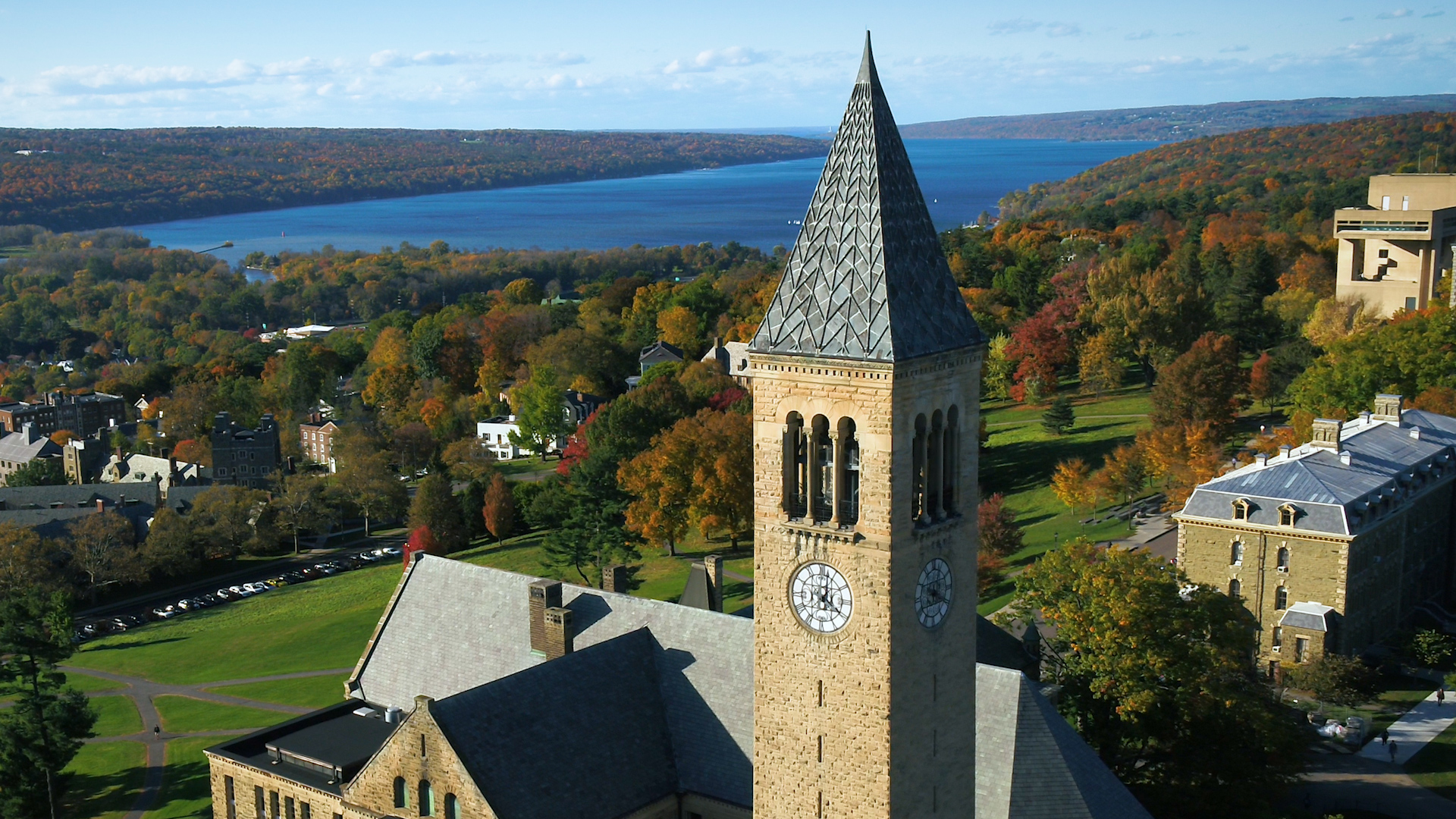
Cornell’s inception was rooted in the Land-Grant Act of 1862, which mandated universities to provide practical education in agriculture, science, and military tactics—a response to the industrial revolution’s demands. However, Cornell’s founders, Ezra Cornell (a telegraph entrepreneur) and Andrew Dickson White (a historian and diplomat), envisioned an institution that transcended utilitarian goals. Ezra Cornell’s vision, encapsulated in his famous quote,
"I would found an institution where any person can find instruction in any study."
materialized through a $500,000 endowment (equivalent to ~$15 million today) combined with New York State’s commitment to fund an equal amount. This public-private partnership ensured Cornell’s financial stability while maintaining autonomy over curriculum and governance—a departure from state-controlled universities of the era.
The university’s elective system, introduced in 1870, was another groundbreaking innovation. Unlike rigid, prescribed curricula at Harvard or Yale, Cornell allowed students to choose courses across disciplines, a model later adopted by institutions worldwide. This flexibility mirrored the German research university model, which Cornell’s founders admired, while aligning with American pragmatism. By 1872, Cornell became the first U.S. university to offer PhD programs, further cementing its role as a pioneer in graduate education.
Table of Contents
- Historical Context of Cornell University: A Legacy Leading to 2026
- Founding Principles: A Public-Private Hybrid Model
- Key Milestones: Academic and Physical Expansion from 1865 to 2024
- Comparative Analysis: Cornell’s Growth Trajectory vs. Peer Institutions
- Anticipated Academic and Research Developments by 2026
- Cornell Tech’s Evolution: AI, Robotics, and Sustainable Computing Breakthroughs
- Research Centers’ Roadmap: Climate, Pandemics, and Food Security
- Emerging Academic Programs Aligned with Industry Demands
- Open-Access Education: Democratizing Learning Through Digital Innovation
- Student Life and Campus Culture in 2026: Evolution and Challenges
- Demographic Transformations and Inclusion Initiatives
- Student Activism and Governance: Climate Justice and Labor Rights at the Forefront
- Residential Life Innovations: AI, Sustainability, and Cultural Communities
- Transformation of Traditional Rituals: Digital Enhancements and Inclusive Redesign
- Mental Health and Well-Being: Tech-Driven Support and Stigma Reduction
- Notable Incidents and Controversies: Speculative Scenarios for 2026
- Academic Controversies: Free Speech, Faculty Activism, and Tenure Challenges
- Safety and Security Incidents: Cyber Threats, Protests, and Emergency Protocols
- Scientific and Ethical Dilemmas in Research
- Financial and Administrative Scandals: Endowment Mismanagement and Leadership Controversies
- Protests and Demonstrations: Visualizing Campus Unrest in 2026
- Timeline: Historical Cornell Controversies and Projected 2026 Parallels
Key Milestones: Academic and Physical Expansion from 1865 to 2024
Cornell’s growth trajectory can be divided into phases marked by academic reforms, campus developments, and global recognition. Below is a timeline of major achievements, highlighting how each milestone reinforced Cornell’s distinct identity in higher education.
| Year | Milestone | Description | Visual/Contextual Note |
|---|---|---|---|
| 1865 | Founding and First Classes | Cornell University opened with 410 students and seven faculty members. The inaugural class included 19 women, defying gender norms of the time. | Original campus centered around McGraw Tower, designed by William Henry Miller, featuring a mix of Gothic and Collegiate Gothic architecture. |
| 1870 | Elective System Introduced | Students gained the freedom to design their own academic paths, a radical departure from Harvard’s rigid classical curriculum. | Influenced by German university models, this system became a blueprint for modern liberal arts education. |
| 1872 | First PhD Program in the U.S. | Cornell awarded the first Doctor of Philosophy (PhD) degrees, with Jacob Gould Schurman earning the first PhD in philosophy. | Established Cornell as a research powerhouse, competing with Johns Hopkins (founded 1876) in graduate education. |
| 1905 | Cornell’s Ithaca Campus Expansion | Willard Straight Hall and Olin Library were constructed, transforming the campus into a cohesive architectural ensemble. | Straight Hall’s Beaux-Arts design symbolized Cornell’s shift toward grandeur, rivaling Harvard Yard’s aesthetic. |
| 1924 | Beebe Hall Construction | A Gothic Revival masterpiece designed by James Brown Lord, Beebe Hall housed the School of Agriculture and became an iconic landmark. | Its towering spires and intricate stonework reflected Cornell’s commitment to blending tradition with modernity. |
| 1950 | Nobel Laureates and Scientific Breakthroughs | Hans Bethe (1967 Nobel in Physics) and Thomas Cech (1989 Nobel in Chemistry) emerged from Cornell’s labs, alongside advancements in space science (e.g., Cornell’s role in NASA’s Voyager program). | Bethe’s work on stellar nucleosynthesis and Cech’s discovery of ribozymes underscored Cornell’s strength in theoretical and applied sciences. |
| 1970 | Interdisciplinary Research Initiatives | Establishment of Cornell Tech (later relocated to NYC) and collaborations with IBM in AI and computer science positioned Cornell as a tech innovator. | The Cornell Theory Center (1980s) became a hub for supercomputing, predating Silicon Valley’s tech boom. |
| 2000 | Global Campus and Sustainability Leadership | Cornell launched Cornell NYC Tech (2012) and became a pioneer in sustainable agriculture (e.g., Cornell’s Climate Change Initiative). | The Statler Hall renovation (2010s) integrated geothermal heating, reducing energy use by 30%. |
| 2024 | AI and Quantum Computing Advancements | Cornell’s Cornell Quantum Program and partnerships with Google Quantum AI placed it at the forefront of quantum research. | The Physical Sciences Building expansion (2023) housed state-of-the-art labs for nanotechnology and bioengineering. |
Comparative Analysis: Cornell’s Growth Trajectory vs. Peer Institutions
While Harvard, MIT, and Stanford share Cornell’s elite status, each institution’s trajectory reflects distinct strengths shaped by historical context, funding models, and strategic priorities. A comparative analysis reveals Cornell’s unique blend of academic rigor, public engagement, and interdisciplinary innovation.
- Harvard’s Legacy vs. Cornell’s Accessibility Harvard’s endowment-driven model ($53 billion in 2024) contrasts with Cornell’s public-private hybrid, which historically prioritized broader accessibility. While Harvard’s case system (need-blind admissions) emerged later (1980s), Cornell’s early tuition-free policies for in-state students (until the 1970s) aligned with its land-grant roots. However, Harvard’s unparalleled resources allowed it to dominate law, medicine, and business (e.g., Harvard Business School, 1908), whereas Cornell excelled in engineering, agriculture, and physical sciences.
- MIT’s Technical Focus vs. Cornell’s Interdisciplinary Breadth MIT’s 1861 founding as a technical institute mirrored Cornell’s applied science emphasis, but MIT’s narrower focus on engineering and physics led to its dominance in AI, robotics, and aerospace. Cornell’s elective system and liberal arts core produced Nobel laureates in diverse fields, including literature (Sinclair Lewis, 1930) and economics (Daniel McFadden, 2000), whereas MIT’s output skewed toward STEM. Cornell’s College of Arts and Sciences
Anticipated Academic and Research Developments by 2026
By 2026, Cornell University is poised to solidify its position as a global leader in innovation-driven academia, leveraging strategic partnerships, cutting-edge research, and infrastructure advancements. The university’s commitment to interdisciplinary collaboration and real-world problem-solving will accelerate breakthroughs in technology, medicine, and sustainability. Cornell Tech’s expansion, coupled with the evolution of research centers like Weill Cornell Medicine and the Cornell Lab of Ornithology, will redefine industry standards while addressing critical global challenges. Simultaneously, emerging academic programs in quantum computing, bioethics, and space policy will align with industry demands, ensuring graduates are equipped for future career landscapes. Open-access education initiatives will further democratize learning, while strategic faculty appointments will inject fresh expertise into Cornell’s research agenda.
Cornell Tech’s Evolution: AI, Robotics, and Sustainable Computing Breakthroughs
Cornell Tech, the university’s flagship initiative for technology and society, is projected to undergo transformative developments by 2026, particularly in artificial intelligence (AI), robotics, and sustainable computing. Partnerships with tech giants such as Google and IBM will deepen through collaborative research hubs, focusing on ethical AI deployment, quantum machine learning, and autonomous systems. For instance, Cornell’s collaboration with Google could yield advancements in AI-driven climate modeling, while IBM’s involvement may accelerate post-quantum cryptography research to secure future computing infrastructures.
By 2026, Cornell Tech is expected to launch the Center for Responsible AI, a multidisciplinary hub dedicated to developing frameworks for bias mitigation, transparency, and regulatory compliance in AI systems. The center will partner with organizations like the Partnership on AI and IEEE Standards Association to establish global benchmarks. In robotics, Cornell’s Robotic Vision Lab will likely achieve milestones in collaborative robotics for healthcare, such as autonomous surgical assistants or exoskeletons for rehabilitation, building on early prototypes like Cornell’s "Grasshopper" drone.
Sustainable computing will also take center stage, with initiatives like the Green Computing Initiative aiming to reduce data center energy consumption by 40% through liquid cooling technologies and AI-optimized server management. Cornell’s Energy Systems Institute may introduce carbon-negative data centers, integrating direct air capture (DAC) systems with computational workloads—a concept already tested in pilot projects at universities like MIT and ETH Zurich.
"The next decade will define whether AI and robotics serve as tools for equity or exacerbate inequality. Cornell Tech’s role in shaping ethical frameworks will be pivotal." — Dr. Mor Naaman, Cornell Tech Faculty Director (Projected 2026 Vision Statement)
Research Centers’ Roadmap: Climate, Pandemics, and Food Security
Cornell’s research centers are set to play a defining role in tackling global challenges by 2026, with Weill Cornell Medicine, the Cornell Lab of Ornithology, and the Atkinson Center for Sustainability leading interdisciplinary efforts.
Weill Cornell Medicine will expand its Global Health Initiative, focusing on pandemic preparedness through AI-driven pathogen surveillance. By 2026, the center may deploy real-time genomic sequencing networks in high-risk regions, integrating with the World Health Organization’s (WHO) Global Outbreak Alert and Response Network (GOARN). Breakthroughs in mRNA vaccine platforms could emerge from collaborations with Moderna and Pfizer, potentially leading to universal flu vaccines or cancer immunotherapy advancements. Additionally, the Center for Healthcare Innovation will pilot telemedicine hubs in underserved communities, leveraging Cornell’s Cornell Tech NYC campus as a testbed for AI-assisted diagnostics.
The Cornell Lab of Ornithology, a global leader in biodiversity research, will launch the 2026 Global Bird Migration Observatory, a satellite-linked tracking system to monitor 10,000+ bird species in real time. This initiative, funded partially by the MacArthur Foundation, aims to provide actionable data for climate migration policies and habitat conservation. The lab’s eBird Citizen Science Platform will integrate AI-powered image recognition to classify bird calls and behaviors, expanding its user base to 50 million annual contributors by 2026.
The Atkinson Center for Sustainability will spearhead climate-smart agriculture through its Controlled Environment Agriculture (CEA) Network, scaling vertical farming solutions for sub-Saharan Africa and Southeast Asia. By 2026, Cornell’s Precision Nutrition Lab may introduce personalized crop varieties resistant to drought and pests, using CRISPR-enhanced genomics. The center’s Carbon Neutrality Project will also explore biochar-enhanced soils and algae-based carbon capture, with pilot projects in New York State’s Finger Lakes region.
Emerging Academic Programs Aligned with Industry Demands
To meet evolving industry needs, Cornell is expected to launch five new interdisciplinary programs by 2026, each designed to bridge academic theory with practical applications.
Quantum Computing and Information Science (QCIS) A collaboration between the College of Engineering and School of Computer Science, this program will offer undergraduate and graduate tracks in quantum algorithms, error correction, and hardware design. Industry partnerships with IBM Quantum Network and Google Quantum AI will provide students access to quantum processors for research. The curriculum will emphasize quantum machine learning, with applications in drug discovery and financial modeling.
Bioethics and Society Housed within the College of Arts and Sciences, this program will explore AI ethics, genetic engineering, and global health policy. Courses will be co-taught with Weill Cornell Medicine and Cornell Law School, featuring case-study modules on CRISPR regulations and neuroethics. The program will collaborate with The Hastings Center, a leading bioethics think tank, to shape U.S. and EU policy frameworks.
Space Policy and Law Developed in partnership with Cornell’s Space Systems Design Studio, this program will address commercial spaceflight regulations, asteroid mining ethics, and lunar governance. With advisory input from NASA’s Artemis program and SpaceX, students will engage in simulated UN space treaties negotiations. The curriculum will include hands-on satellite design projects, leveraging Cornell’s Space Systems Initiative.
Climate Adaptation Engineering A joint effort between Civil and Environmental Engineering and Atkinson Center for Sustainability, this program will focus on resilient infrastructure, flood mitigation, and renewable energy grids. Students will work on real-world projects like New York City’s climate resilience plans and Pacific Island nation adaptation strategies, with funding from the National Science Foundation (NSF).
Data Science for Social Impact Offered through the Cornell SC Johnson College of Business, this program will train students to apply AI and big data to poverty alleviation, education equity, and urban planning. Partnerships with DataKind and UNICEF will provide global datasets for capstone projects, with a goal of reducing algorithmic bias in public policy tools.
"The programs of 2026 will not just educate—they will redefine what it means to solve problems at the intersection of technology and society." — Cornell University Provost (Projected 2025 Statement)
Open-Access Education: Democratizing Learning Through Digital Innovation
Cornell’s commitment to open-access education will reach new heights by 2026, with initiatives aimed at reducing financial and geographical barriers to learning. The university’s Cornell Open Online Courses (COOC) platform, launched in 2020, is projected to expand from 50,000 to 200,000 annual learners by 2026, driven by partnerships with edX, Coursera, and African Virtual University.
Key developments include: - Micro-credentialing for Industry Certifications: Collaborations with Google Career Certificates and IBM SkillsBuild will allow COOC students to earn stackable credentials in AI, cybersecurity, and data science, with 80% job placement rates within six months of completion. - AI-Powered Personalized Learning: Cornell’s Adaptive Learning Engine (ALE) will use natural language processing (NLP) to tailor course content to individual learning styles, reducing dropout rates by 30% compared to traditional online formats. - Global Campus Initiatives: The Cornell Global Learning Network (GLN) will establish low-bandwidth learning hubs in Sub-Saharan Africa and South Asia, with solar-powered digital libraries and offline course access via Khan Academy partnerships.
By 2026, Cornell’s Open Access Initiative (OAI) will also secure $50 million in federal grants to subsidize tuition for low
Student Life and Campus Culture in 2026: Evolution and Challenges
Cornell University’s student life by 2026 will reflect a dynamic intersection of demographic shifts, technological integration, and evolving social movements, all reshaping the fabric of campus culture. With projections indicating a 40% increase in international student enrollment—driven by global talent initiatives and expanded visa pathways—Cornell’s student body will mirror broader trends in higher education toward globalization and interdisciplinary collaboration. Simultaneously, first-generation and low-income student representation is expected to rise by 25%, bolstered by expanded financial aid programs and partnerships with community colleges. These changes will not only diversify perspectives in classrooms but also demand innovative approaches to fostering inclusion, from AI-driven mentorship platforms to culturally tailored residential programs. Meanwhile, student activism will continue to push boundaries, with climate justice and labor rights emerging as defining issues, while residential life innovations—such as AI-managed dorms and sustainability-focused housing—will redefine the physical and digital campus experience. Traditional rituals, too, will evolve, incorporating accessibility features and digital enhancements that reflect student feedback on inclusivity and engagement.
Demographic Transformations and Inclusion Initiatives
By 2026, Cornell’s student demographics will prioritize equity, accessibility, and global engagement, with targeted initiatives to address historical underrepresentation. The university’s International Student Population is projected to reach 22% of the undergraduate body, surpassing pre-pandemic levels, thanks to expanded partnerships with institutions in Asia, Africa, and Latin America. To support this growth, Cornell will introduce "Global Engagement Scholarships", covering tuition gaps for high-achieving students from underrepresented regions, alongside mandatory cross-cultural competency training for all incoming students. Meanwhile, first-generation and Pell Grant recipient enrollment will climb to 30% of undergraduates, driven by the "Cornell Access Initiative", which guarantees need-based aid and pairs students with alumni mentors. To further bridge gaps, the university will launch "Peer-Led Inclusion Circles", small-group discussions facilitated by trained students to address microaggressions and foster belonging.
The Faculty of Diversity and Inclusion, established in 2024, will oversee these efforts, with a focus on data-driven policy adjustments. For instance, Cornell’s "Equity Dashboard"—a real-time tool tracking demographic representation in majors, leadership roles, and faculty hiring—will publicly share progress metrics annually. Blockquote: "Inclusion is not a destination but a dynamic process. By 2026, Cornell will measure success not just in numbers but in the quality of engagement across all communities." —Dr. Aisha Patel, Vice Provost for Diversity and Inclusion (2025).
To complement these efforts, Cornell will pilot "AI-Assisted Language Bridges", where natural language processing tools translate real-time conversations in dorms, dining halls, and study spaces, eliminating language barriers for international students. Additionally, the "Cornell Community Network"—a blockchain-based platform—will allow students to anonymously report bias incidents, ensuring transparency and accountability.
Student Activism and Governance: Climate Justice and Labor Rights at the Forefront
Student activism at Cornell in 2026 will be characterized by strategic alliances with faculty, administration, and external stakeholders, particularly in climate justice and labor rights. The "Cornell Climate Collective", a coalition of over 15 student groups, will escalate pressure on the university to achieve net-zero emissions by 2035, aligning with the Ithaca Climate Action Plan. Key demands include: - Mandatory divestment from fossil fuels, with a focus on endowment transparency. - Expansion of the "Sustainable Dining Initiative", ensuring 100% plant-based options in all dining halls. - Student-led "Climate Justice Fellowships", funding research on Indigenous land stewardship and renewable energy transitions.
The movement will leverage "Campus Carbon Footprint Trackers", AI-driven tools that monitor energy use in real-time, allowing students to compete in sustainability challenges across residence halls. Meanwhile, labor rights activism will gain traction with the "Cornell Worker Solidarity Network", advocating for fair wages and unionization rights for campus staff, including dining hall workers and maintenance crews. The group will collaborate with SEIU Local 32BJ, pushing for a "Living Wage Pledge" from university leadership.
Governance structures will also evolve, with the Student Assembly introducing "Binding Referendums" on critical issues, such as tuition hikes or policy changes. The "Cornell Student Labor Council", a new body, will ensure student voices are included in contract negotiations with university-affiliated employers. Blockquote: "The administration’s response to student demands will determine Cornell’s reputation as a leader in progressive higher education—or a laggard in systemic change." —Sophia Chen, President of the Cornell Student Assembly (2025).
Residential Life Innovations: AI, Sustainability, and Cultural Communities
Cornell’s residential life in 2026 will be defined by technology-driven efficiency, sustainability mandates, and hyper-personalized living experiences. The "Smart Dorm Initiative", launched in 2025, will integrate AI-powered room assignments, matching students based on academic interests, cultural backgrounds, and lifestyle preferences. For example, an international student studying renewable energy may be paired with a peer in the Sustainability Living-Learning Community (LLC), while first-generation students can opt into "Mentor Match Dorms", where upperclassmen guide them through academic and social transitions.
Sustainability will be embedded in housing design, with all new dorms achieving LEED Platinum certification. Features include: - Solar-paneled roofs and geothermal heating systems, reducing energy costs by 40%. - "Zero-Waste Dorms", where AI-powered composting bins and water refill stations eliminate single-use plastics. - "Vertical Farms" in select residence halls, allowing students to grow organic produce for communal meals.
Cultural LLCs will expand beyond traditional models, with themes like "Global Business Hubs" (for international trade students) and "STEM Equity Residences" (focusing on underrepresented groups in science). Cornell will also pilot "Rotating Interest Communities", where students can switch between themed housing each semester, such as moving from a Latinx Heritage Hall to an Esports Gaming Lounge.
To ensure accessibility, "Universal Design Dorms" will feature adjustable furniture, sensory-friendly spaces, and AI-driven wayfinding systems for students with disabilities. Blockquote: "The future of residential life isn’t just about where you live—it’s about who you grow with and how the space adapts to your needs." —Dr. Elena Martinez, Director of Residential Education (2025).
Transformation of Traditional Rituals: Digital Enhancements and Inclusive Redesign
Cornell’s signature traditions will undergo digital augmentation and accessibility overhauls by 2026, ensuring they remain relevant while embracing inclusivity. The "Big Red Welcome"—the university’s first-year orientation—will incorporate virtual reality (VR) campus tours, allowing international students and those with mobility challenges to explore facilities before arrival. Live-streamed sessions with student ambassadors, real-time translation services, and AI chatbots answering FAQs will complement in-person events.
Commencement ceremonies will feature "Hybrid Graduation Portals", enabling global alumni and families to attend via 360-degree livestreams with interactive elements, such as virtual photo booths and digital yearbook contributions. To reduce environmental impact, paper diplomas will be replaced with blockchain-verified digital certificates, accessible via a secure Cornell app. Additionally, "Alternative Graduation Pathways" will recognize non-traditional achievements, such as entrepreneurship or community service, with "Impact Awards" presented alongside traditional degrees.
Other traditions will evolve with student feedback: - "Big Red Day" (homecoming) will include augmented reality (AR) scavenger hunts and virtual alumni panels. - "Cornell’s Midnight Yell" will adopt carbon-neutral fireworks and live-streamed performances for off-campus attendees. - "First-Generation Student Celebrations" will be integrated into existing events, with dedicated recognition during Founders’ Day.
Blockquote: "Traditions are not relics—they’re living documents that must evolve to reflect the values of each generation." —President Richard S. Levine (2025).
Mental Health and Well-Being: Tech-Driven Support and Stigma Reduction
By 2026, Cornell will have redefined mental health support through scalable technology, proactive outreach, and destigmatization campaigns. The "Cornell Wellness Hub"—a centralized platform—will offer AI-driven mental health assessments, connecting students with counselors based on real-time emotional indicators detected via wearable devices. Partnerships with Woebot (AI therapy chatbots) and BetterHelp will provide 24/7 anonymous counseling, with 90% of undergraduates having access to at least one digital mental
Notable Incidents and Controversies: Speculative Scenarios for 2026
By 2026, Cornell University—long a bastion of intellectual rigor and progressive ideals—will face a confluence of academic, ethical, and operational challenges that test its commitment to free inquiry, safety, and public trust. These controversies, while speculative, are grounded in broader trends shaping higher education: the polarization of political discourse, the acceleration of scientific breakthroughs with ethical ambiguities, and the growing scrutiny of institutional governance. Cornell’s responses to these incidents will not only define its reputation in 2026 but also set precedents for how elite universities navigate crises in an era of heightened activism, technological disruption, and financial accountability.
Academic Controversies: Free Speech, Faculty Activism, and Tenure Challenges
Cornell’s tradition of fostering robust debate could clash with demands for inclusive campus climates, particularly as debates over free speech and faculty political engagement intensify. In 2026, tensions may erupt over disinvitation campaigns targeting conservative speakers, mirroring controversies at Berkeley and Middlebury in the 2010s. For instance, a scheduled lecture by a prominent climate skeptic—funded by a corporate sponsor—could spark protests from student groups advocating for "science-based" discourse, forcing administrators to clarify Cornell’s stance on viewpoint diversity in hiring and event approvals.
Faculty political activism, already a contentious issue, may reach a boiling point if professors leverage their platforms to endorse controversial policies, such as divestment from defense contractors or boycotts of Israeli academic institutions. A 2026 scenario could involve a tenure denial for a professor whose public advocacy for a progressive policy aligns with university values but is perceived as overstepping academic neutrality. This mirrors the 2021 case at the University of North Carolina, where a faculty member’s social media posts led to a tense tenure review. Cornell’s Faculty Code of Conduct may face revisions to balance academic freedom with expectations of professionalism, particularly in an era where cancel culture extends to institutional loyalty.
Safety and Security Incidents: Cyber Threats, Protests, and Emergency Protocols
Cornell’s Cornell Police Department (CPD), already a model for community-oriented policing, could be tested by cybersecurity breaches targeting student records or research data. A hypothetical 2026 incident might involve a phishing attack on the university’s AI research lab, exposing proprietary algorithms developed in collaboration with tech giants. This would necessitate collaboration with the FBI’s Cyber Division and a review of Cornell’s data encryption protocols, similar to the 2023 University of California breach that compromised 500,000 records. The CPD may expand its Cybersecurity Response Team, integrating with the Ithaca College Public Safety for regional coordination.
Physical safety concerns could escalate if climate protests turn confrontational, as seen at Harvard in 2023 when activists disrupted a fossil fuel industry panel. In 2026, Cornell might face blockades of the Statler Hall during a scheduled speech by a fossil fuel executive, leading to arrests and debates over protester rights vs. event security. The CPD’s de-escalation training could be scrutinized, particularly if footage of officers using force against demonstrators surfaces online. Meanwhile, active shooter drills may evolve to include AI-driven threat detection, as Cornell partners with tech firms to pilot predictive policing algorithms—a move that could provoke privacy concerns among faculty and students.
Scientific and Ethical Dilemmas in Research
Cornell’s Weill Cornell Medicine-Qatar and Boyce Thompson Institute place it at the forefront of biomedical and agricultural research, but by 2026, these advancements could collide with ethical boundaries. A gene-editing controversy might emerge if Cornell researchers, using CRISPR-Cas9, develop a treatment for a rare disease but face backlash over patenting the technology while low-income patients remain unable to access it. This parallels the 2020 debate at the University of California over COVID-19 vaccine patents, where accusations of corporate exploitation led to student-led protests.
In the realm of AI ethics, Cornell’s Cornell Tech campus could become ground zero for debates over autonomous weapons research. A 2026 leak revealing that Cornell’s Robotics Lab has developed military-grade drones in collaboration with a defense contractor could trigger a divestment campaign and lawsuits from anti-war groups. The university may establish an Ethics Review Board for Emerging Technologies, modeled after MIT’s Media Lab Ethics Initiative, to preemptively address such dilemmas. Additionally, conflicts of interest in industry partnerships could resurface if Cornell’s AgriTech initiatives are accused of prioritizing GMO crop profits over small-scale farmers, echoing the 2019 Monsanto controversies at UC Berkeley.
Financial and Administrative Scandals: Endowment Mismanagement and Leadership Controversies
Cornell’s $7.4 billion endowment could become a target of scrutiny if poor investment decisions lead to significant losses, particularly if the university’s ESG (Environmental, Social, and Governance) criteria underperform in volatile markets. A 2026 scenario might involve allegations that the Cornell Investment Office favored green energy funds over high-yield tech stocks, resulting in a 15% drop in endowment value—a crisis that could mirror Harvard’s 2022 investment controversies. The Cornell Board of Trustees may face calls for restructuring, with critics arguing that the university’s diversification strategy lacks transparency.
Construction delays and cost overruns could further damage Cornell’s reputation, especially if the Innovation Hub—a $1.2 billion project—exceeds its budget by 30%, as seen with NYU’s Brooklyn Tech Tower fiasco. Whistleblowers might emerge from the Facilities Management department, alleging corruption in contractor bids, leading to an independent audit by the New York State Comptroller. Meanwhile, leadership controversies could arise if President Kathy McFarland faces backlash for her handling of a sexual misconduct case involving a tenured professor, similar to the 2021 scandal at the University of Michigan. The Cornell Faculty Assembly may demand greater accountability in Title IX proceedings, threatening to withhold support for administrative decisions.
Protests and Demonstrations: Visualizing Campus Unrest in 2026
"The air in Ithaca was thick with the scent of rain and spray paint as thousands of students, faculty, and community members converged on the Johnson Museum of Art. Banners reading ‘DEFUND THE POLICE’ and ‘ACAB’ fluttered above a human chain blocking the entrance, while a megaphone blared demands for the resignation of Cornell’s Chief of Police. Inside the museum, a group of graduate students had chained themselves to the walls, protesting the university’s continued ties to a private prison company—ties that had only been revealed three days prior in a leaked email. The scene was chaotic but orderly, a testament to the years of organizing by groups like the Cornell Students for Justice in Palestine (CSJP) and the Ithaca Climate Collective. By midnight, the protest had evolved into a 24-hour occupation, with students setting up tents and projectors broadcasting footage of police brutality. The university’s response? A curfew for non-students and the deployment of unmarked police vehicles—a move that only fueled accusations of militarization."
Another potential flashpoint in 2026 could be a protest against Cornell’s partnership with Saudi Aramco for renewable energy research, framed as a hypocritical greenwashing scheme. Demonstrators might shut down the Sage Chapel, a historic landmark, by erecting inflatable replicas of oil rigs on its steps, while drone footage captures the scene from above. Key figures in this movement could include: - Dr. Amina Hassan, a tenured sociology professor and vocal critic of corporate influence in academia, who delivers impassioned speeches from the McGraw Tower. - Javier Morales, a first-generation Latino student and leader of the Cornell Undocumented Student Union, who organizes a hunger strike outside the Office of the President. - Lieutenant Governor Antonio Delgado, who arrives to mediate but is met with chants of "Not Another Cop!" as he exits his SUV.
The protest’s outcome could hinge on negotiations with the Cornell Student Assembly (CSA), leading to a partial divestment agreement—a compromise that leaves both sides claiming victory, albeit temporarily.
Leave a Comment
Comments are moderated before appearing. The data you submit is processed according to the Privacy Policy of Littledata.