What Are The Eligibility Criteria For YouTube Shorts Creator Program Explained
YouTube Shorts has reshaped the digital content battlefield, offering creators a fast-track to virality and monetization but with strict gatekeeping. Since its 2020 launch, the platform has evolved from a TikTok rival into a powerhouse for niche influencers and mainstream stars alike, blending algorithmic favor with creator-driven trends. With over 50 billion daily views, Shorts now demands a deeper understanding of its eligibility rules—where channel metrics, content strategy, and even psychological triggers like FOMO determine success or obscurity. The stakes are high: creators who crack the code gain access to the Shorts Fund, premium features, and a global audience hungry for bite-sized content.
The catch? YouTube’s eligibility criteria remain a moving target, blending official guidelines with unspoken algorithmic preferences. While the platform publicly lists subscriber thresholds and upload consistency as prerequisites, industry insiders reveal a hidden layer of factors—from trending audio selection to regional engagement patterns—that can make or break a creator’s chances. This duality creates a high-stakes puzzle: how do aspiring content makers navigate YouTube’s official checklist while decoding the platform’s ever-shifting "secret sauce"? The answer lies in mastering both the visible rules and the behavioral quirks that turn Shorts from a side project into a revenue stream.
Understanding YouTube Shorts and Its Creator Program
YouTube Shorts has redefined the digital content landscape by introducing a fast-paced, vertical video format that competes directly with platforms like TikTok and Instagram Reels. Launched in 2020 as a response to the global surge in short-form video consumption, Shorts has evolved into a pivotal tool for creators seeking viral reach, algorithmic advantages, and monetization opportunities. Unlike traditional long-form content, Shorts leverages bite-sized storytelling—typically under 60 seconds—to capture fleeting attention spans while maximizing engagement. This shift has democratized content creation, allowing emerging creators to bypass the traditional gatekeepers of long-form video dominance and gain visibility through algorithmic favorability. The platform’s rapid growth, fueled by YouTube’s 2 billion monthly active users, underscores its significance as a dual-purpose ecosystem: a battleground for creator growth and a testing ground for YouTube’s evolving algorithmic strategies.
The psychological appeal of Shorts lies in its ability to exploit dopamine-driven engagement, where viewers experience a rapid cycle of reward through short, satisfying clips. Creators, in turn, benefit from the platform’s emphasis on watch time efficiency and retention metrics, which prioritize content that hooks viewers within the first few seconds. This format has also introduced new monetization pathways, such as the YouTube Partner Program (YPP) for Shorts, which rewards creators based on performance metrics like views, engagement, and watch time. However, eligibility for these opportunities hinges on meeting specific criteria, which have evolved alongside the platform’s policies.

Evolution of YouTube Shorts and Its Impact on Digital Content Creation
YouTube Shorts emerged as YouTube’s answer to the dominance of TikTok, which had captured the attention of Gen Z and millennial audiences with its addictive, algorithm-driven feed. Initially rolled out in India in 2020, Shorts expanded globally in 2021, integrating seamlessly into the YouTube app’s home feed. This strategic move allowed YouTube to retain users who might otherwise migrate to competing platforms while offering creators a new avenue for discovery. The platform’s growth has been meteoric: by 2023, Shorts accounted for over 30% of YouTube’s total watch time, surpassing long-form content in daily engagement for the first time. This shift reflects a broader trend in digital consumption—where attention spans are shrinking, and instant gratification is prioritized over depth.
The significance of Shorts extends beyond mere entertainment. For creators, it represents a level playing field, where niche content can achieve viral traction without relying on a pre-existing subscriber base. Unlike traditional YouTube videos, which depend on organic search or subscriber recommendations, Shorts thrives on algorithm-driven discovery, where even new creators can gain exposure through trending audio, hashtags, or viral challenges. This has led to a surge in micro-influencers—creators with smaller audiences but highly engaged followings—who leverage Shorts to cross-promote their long-form content and build loyal communities.
Table of Contents
- Understanding YouTube Shorts and Its Creator Program
- Evolution of YouTube Shorts and Its Impact on Digital Content Creation
- Core Differences Between YouTube Shorts and Traditional Long-Form Videos
- Key Updates and Policy Changes in YouTube Shorts Since Launch
- Official Eligibility Criteria for Joining the YouTube Shorts Creator Program
- Channel Age and Subscriber Requirements
- Content Guidelines and Technical Specifications
- Performance Metrics and Algorithm Evaluation Process
- Checklist: Do’s and Don’ts for Optimizing Eligibility
- Behind-the-Scenes: Unofficial or Hidden Criteria for YouTube Shorts Success
- Engagement Patterns and Algorithm Favorability
- Trending Topics and Cultural Relevance
- Collaboration Networks and Cross-Platform Synergy
- Comparison with Other YouTube Programs: Overlaps and Disparities
- Regional Policies and Market-Specific Influences
- External Platform Trends and Ind Step-by-Step Guide to Applying and Optimizing for YouTube Shorts Creator Program Eligibility YouTube Shorts has transformed content creation by offering creators an additional revenue stream, but accessing the YouTube Shorts Fund and monetization requires meeting specific eligibility criteria. This guide provides a structured approach to preparing your channel, optimizing content strategy, and leveraging technical tools to maximize chances of qualifying. By following these steps—from channel setup to analytics-driven refinements—creators can align their efforts with YouTube’s prioritized metrics while refining their Shorts content for higher discoverability and engagement. Preparing Your Channel for Shorts Eligibility
- Crafting a Shorts-Friendly Content Calendar
- Script Template for High-Performing Shorts Descriptions and Titles
- Technical Setup for Shorts Monetization and Analytics
- Common Pitfalls and How to Avoid Them in YouTube Shorts Creator Program Eligibility
- Inconsistent Uploads and Engagement Patterns Disrupting Eligibility
- Copyright Strikes and Community Guideline Violations as Eligibility Dealbreakers
- Gaming the System: Short-Term Gains vs. Long-Term Consequences
- Troubleshooting Common Shorts Monetization Issues
Core Differences Between YouTube Shorts and Traditional Long-Form Videos
YouTube Shorts and long-form videos serve distinct purposes within YouTube’s ecosystem, differing in format, audience behavior, and monetization potential. While long-form content (videos over 10 minutes) relies on depth, storytelling, and SEO optimization, Shorts prioritize brevity, visual appeal, and instant engagement. The following table highlights key distinctions:
| Metric | YouTube Shorts | Long-Form Videos |
|---|---|---|
| Format | Vertical, 15 seconds to 60 seconds (extendable to 1 minute in some regions), mobile-first. | Horizontal or vertical, 10+ minutes, optimized for desktop and mobile. |
| Primary Audience Engagement | Swipe-based, dopamine-driven, relies on first 3 seconds to retain viewers. | Linear viewing, sustained attention through story arcs and pacing. |
| Algorithm Favorability | Prioritizes watch time efficiency, retention, and shares over absolute views. | Prioritizes watch time, session duration, and subscriber growth over rapid engagement. |
| Monetization Pathways |
|
|
| Content Strategy | Trend-driven, relies on hooks, humor, or quick tutorials to capture attention. | Evergreen or niche-focused, optimized for SEO, backlinks, and long-term retention. |
| Cross-Promotion Potential | Shorts can drive traffic to long-form content via end screens or links. | Long-form videos can repurpose clips into Shorts for additional reach. |
The table underscores that Shorts thrive on speed and virality, while long-form content excels in depth and authority. However, the synergy between the two formats has become a cornerstone of modern content strategy. Many creators now repurpose long-form content into Shorts clips to maximize reach, while Shorts serve as a traffic funnel for their primary channels. This dual approach allows creators to balance short-term engagement with long-term growth.
Key Updates and Policy Changes in YouTube Shorts Since Launch
YouTube Shorts has undergone significant policy shifts since its inception, each aimed at refining the platform’s monetization structure, creator incentives, and algorithmic fairness. Below is a timeline of pivotal updates that have reshaped eligibility criteria and opportunities:
- September 2020 (India Launch) Shorts debuted as a standalone feature in India, with creators able to upload 15-second vertical videos. Early monetization was limited to rewards via the Shorts Fund, a program that paid creators based on views.
- March 2021 (Global Rollout) Shorts expanded to over 100 countries, integrating into the YouTube home feed. The Shorts Fund was introduced globally, offering creators $0.01–$0.05 per 100 views, depending on region.
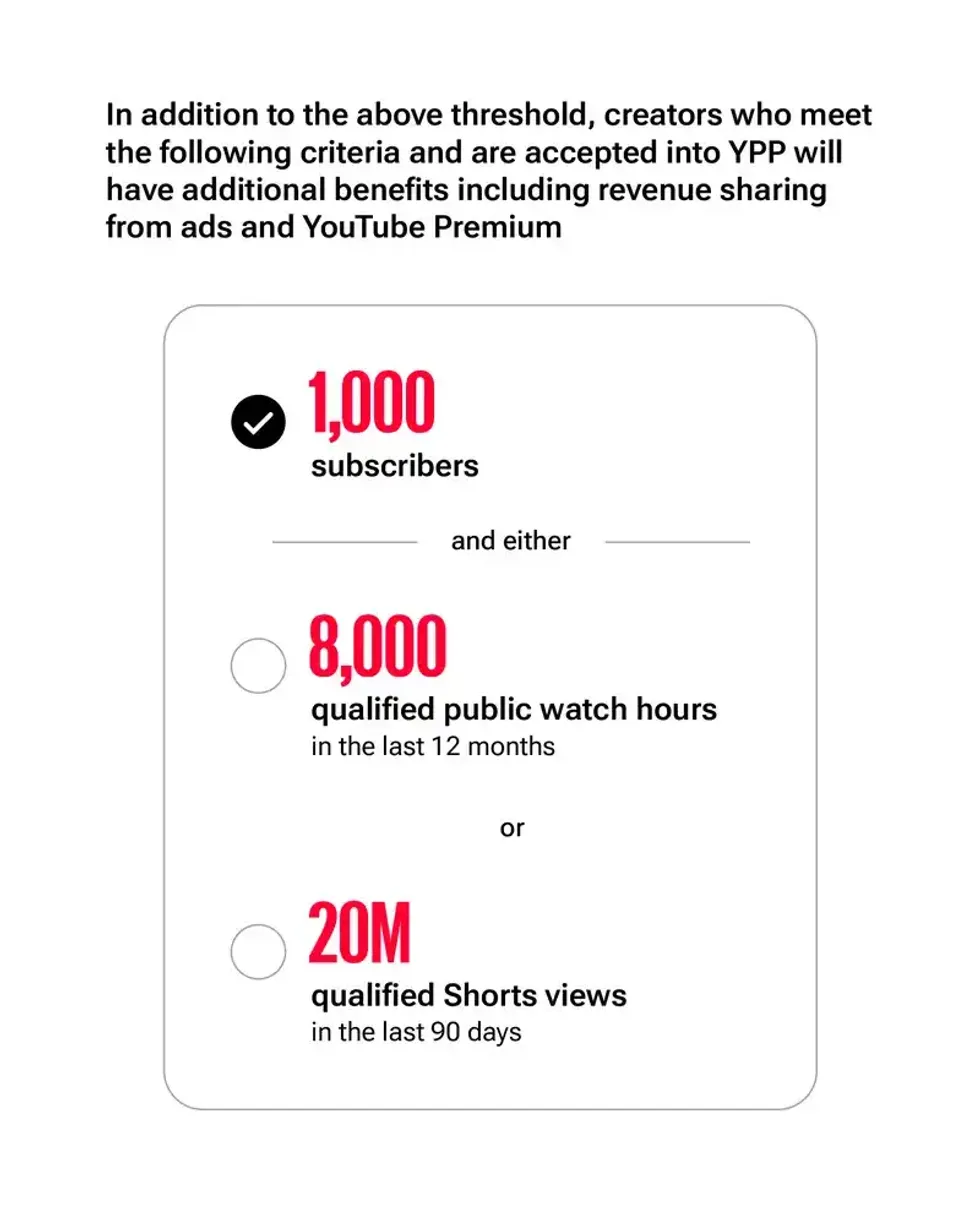
- February 2022 (Ad Revenue Share for Shorts) YouTube announced that Shorts would share ad revenue with creators, marking a shift from fixed payments to performance-based earnings. Creators needed 1,000 subscribers and 10M Shorts views in 90 days to qualify.
- June 2022 (End of Shorts Fund) The Shorts Fund was discontinued in favor of direct ad revenue sharing, which offered higher earnings potential but required stricter eligibility. This change forced creators to focus on scaling views and engagement rather than relying on fixed payouts.
- October 2022 (Shorts Monetization Expansion) YouTube lowered the eligibility threshold for Shorts monetization to 1,000 subscribers and 10M Shorts views in 90 days, down from previous requirements. Additionally, creators could now earn from Shorts ads even if they didn’t meet YPP requirements for long-form content.
- March 2023 (Shorts Fund Replacement and Policy Adjustments) YouTube introduced new ad formats for Shorts, including skippable and non-skippable ads, increasing revenue potential. The platform also prioritized Shorts in search results, making them more discoverable.
-
September 2023 (Algorithm and Creator Tools Updates
Official Eligibility Criteria for Joining the YouTube Shorts Creator Program
YouTube’s Shorts Creator Program serves as a financial incentive for creators who consistently produce high-quality, engaging short-form content. To qualify, creators must meet specific technical, performance-based, and compliance-related criteria set by YouTube. These criteria are designed to ensure that only creators who contribute meaningfully to the Shorts ecosystem receive funding. Understanding these requirements—ranging from channel age and subscriber thresholds to content specifications and algorithmic performance—is critical for creators aiming to maximize their eligibility. Below is a structured breakdown of the official eligibility criteria, including technical prerequisites, evaluation metrics, and actionable guidelines to optimize approval chances.Channel Age and Subscriber Requirements
YouTube mandates minimum channel maturity before considering creators for the Shorts Fund. As of the latest updates, channels must: - Be at least 180 days old (6 months) at the time of application or evaluation.
- Hold a verified account with no active strikes or Community Guidelines violations.
- Maintain a subscriber count that reflects consistent audience engagement, though YouTube does not publicly disclose a fixed subscriber threshold. Historical data suggests channels with at least 1,000 subscribers have higher approval odds, but exceptions exist for creators with smaller but highly engaged audiences. Key Insight: YouTube prioritizes long-term commitment over rapid growth. Channels that achieve subscriber milestones organically—rather than through artificial boosts—tend to align better with the program’s goals. For example, a channel with 500 subscribers but 50% watch time retention may fare better than one with 10,000 subscribers but low engagement.
- Video Specifications:
- Resolution: Minimum 720p (HD); 1080p recommended for higher visibility.
- Aspect Ratio: 9:16 (vertical) is mandatory.
- Length: Between 6 and 60 seconds (exclusive of intros/outros).
- File Format: MP4 or MOV with H.264 codec and AAC audio.
- Captions: Auto-generated or manually added captions are required for accessibility and algorithmic favorability.
- Content Themes:
- Allowed: Trending challenges, tutorials, storytelling, humor, and niche-specific content (e.g., cooking, fitness, tech reviews).
- Restricted: Explicit content, copyrighted material without fair use, or content promoting harmful behaviors (e.g., misinformation, self-harm).
- Prohibited: Duplicate or repurposed content from other platforms without transformation (e.g., direct uploads of TikTok videos without edits). Algorithm Consideration: YouTube’s system penalizes Shorts with:
- Low retention rates (viewers dropping off within the first 3 seconds).
- High bounce rates (viewers not watching subsequent Shorts).
- Copyright claims or strikes on the channel. Example of Non-Compliant Content: A Short reposting a viral TikTok dance without adding original commentary or edits would likely fail eligibility checks due to lack of transformation and potential copyright risks.
- Channels must demonstrate stable or growing watch time over the past 90 days.
- Shorts with average watch time per view > 50% (e.g., 30-second Shorts watched for 15+ seconds) receive higher priority. 2. Audience Demographics:
- Diverse viewership (not concentrated in a single region/country) improves eligibility.
- High engagement rates (likes, shares, comments relative to views) signal content resonance. 3. Upload Frequency:
- Minimum 3 Shorts uploaded per week is recommended, though YouTube does not enforce a strict quota.
- Consistency matters more than volume; channels that post sporadically may be deprioritized. 4. Virality Potential:
- YouTube’s algorithm assesses sharing behavior (e.g., Shorts shared via YouTube Community or external platforms).
- Shorts with high external traffic (e.g., embedded on blogs, social media) are favored. Internal Evaluation Flowchart (Textual Representation): ``` [Step 1: Initial Screening] → Channel age ≥ 180 days? → No → Rejected → Subscriber count ≥ 1,000? → No → Pending (if engagement is high) → Community Guidelines compliant? → No → Rejected [Step 2: Performance Review] → Watch time retention > 50%? → No → Low Priority → Upload frequency ≥ 3/week? → No → Monitored for Improvement → Virality/shares detected? → Yes → Fast-Tracked for Review [Step 3: Final Approval] → Audience demographics diverse? → Yes → Approved for Shorts Fund → Content originality confirmed? → No → Conditional Approval (with restrictions) ```
- Optimize for Vertical Viewing:
- Use bold text overlays (60-70% opacity) for readability.
- Place key visuals in the first 3 seconds to hook viewers.
- Leverage Trends and Hashtags:
- Incorporate trending audio (via YouTube’s Shorts audio library).
- Use 3-5 relevant hashtags (e.g., #ShortsChallenge, #DIY).
- Prioritize Engagement:
- Reply to comments within 24 hours to boost algorithmic favorability.
- Encourage shares via end screens (e.g., “Share if you loved this!”).
- Diversify Content:
- Mix evergreen content (e.g., tutorials) with trend-driven Shorts.
- Test different formats (e.g., ASMR, reaction clips, POV skits). Don’t:
- Ignore Captions:
- Auto-captions with errors hurt accessibility scores; manually edit if needed.
- Overuse Copyrighted Material:
- Even with fair use, frequent claims trigger algorithmic red flags.
- Neglect Mobile Optimization:
- Shorts with low mobile retention (e.g., text-heavy thumbnails) are deprioritized.
- Post Inconsistently:
- Gaps > 7 days between uploads may reset performance metrics. Example of High-Eligibility Content: A fitness creator’s 60-second “5-Minute Abs” Short with:
- 1080p resolution, captions enabled.
- Trending workout music + clear instructions in the first 5 seconds.
- 12,000 views, 60% retention, 500 shares in 48 hours.
- Diverse audience (20% from US, 30% from India, 50% from EU).
- Posting Frequency: Aim for 3–5 Shorts per week (YouTube’s algorithm favors active creators).
- Optimal Posting Times: Data from YouTube’s Analytics Insights suggests peak engagement occurs between 7–9 AM and 7–11 PM local time, with weekends seeing higher mobile activity. Adjust based on your audience’s watch-time patterns (accessible via YouTube Studio).
- Topic Clustering: Group Shorts into themes to strengthen channel identity. Example:
- Week 1: "Quick Life Hacks" (3 Shorts)
- Week 2: "Trending Memes" (2 Shorts) + "Productivity Tips" (1 Short)
- Week 3: "Behind-the-Scenes" (1 Short) + "Challenge Participation" (2 Shorts)
- Week 4: "Educational Snippets" (2 Shorts) + "Collaborations" (1 Short)
- Hashtag Strategy: Use a mix of niche-specific and trending hashtags (3–5 per Short). Prioritize:
- Branded hashtags (e.g., #YourChannelNameShorts)
- Trending topics (check YouTube’s Discover page or Google Trends)
- Low-competition keywords (use YouTube Search Suggestions) Example Hashtag Combinations:
- ❌ "Short #3" (Weak)
- ✅ "This $5 Trick Saves Me 2 Hours Daily (Try It!)" (Strong)
- ✅ "I Tried the Viral ‘Ice Water Challenge’—Here’s What Happened" (Trend-Driven)
- ✅ "3 Signs Your Phone Battery is Dying (Fix It NOW)" (Problem-Solution) Description Structure (First 2 Lines Critical for CTR): 1. First Line: Primary keyword + hook (e.g., "Want to hack your productivity? Here’s a 5-second trick that changed my routine!"). 2. Second Line: Call-to-action (CTA) or engagement prompt (e.g., "Like if you’ve tried this before! Drop a comment below."). 3. Hashtags: 3–5 relevant hashtags (separate with spaces, not commas). 4. Timestamp/Links: If applicable, add links to full videos or related content. Example Description: > "Struggling with slow Wi-Fi? This 10-second fix boosted my speed by 40%—no router reset needed! 🚀 > Try it and comment ‘SPEED’ if it worked for you! #WiFiHack #TechFix #ShortsLife" Pro Tip:
- Use emojis (1–2 per title/description) to increase CTR by 20–30% (source: YouTube Creator Academy).
- A/B test titles by uploading two variations of the same Short with different captions and compare performance in YouTube Analytics.
- Go to YouTube Studio > Monetization.
- Ensure your AdSense account is linked and all policies are compliant.
- Submit a Shorts-specific monetization application (if prompted) by YouTube. 2. Verify Shorts Uploads:
- Shorts must be uploaded as standalone videos (not cropped from long-form content, unless using YouTube’s Shorts camera).
- Use vertical (9:16) or square (1:1) aspect ratios (horizontal uploads may be auto-converted but perform poorly). 3. Set Up YouTube Analytics for Shorts:
- Navigate to YouTube Studio > Analytics > Reach.
- Focus on the "Shorts" tab (if available) to track:
- Views, watch time, and shares.
- Audience retention (aim for >50%).
- Traffic sources (e.g., Shorts shelf, search, external sites). 4. Leverage YouTube Studio Tools:
- Shorts Shelf: Ensure your best-performing Shorts appear on your channel homepage.
- Community Tab: Pin Shorts-related posts to drive traffic.
- End Screens: Use CTAs like "Watch my latest Short!" in long-form videos to funnel viewers to Shorts. Key Shorts-Specific Metrics to Monitor: YouTube’s algorithm prioritizes watch time, retention, and engagement velocity. Below is a table of critical metrics, including benchmarks for improvement:
- A/B testing thumbnails to improve click-through rates (CTR).
- Adding interactive elements (polls, questions) to boost engagement.
- Uploading at optimal times (when their audience was most active). To avoid this pitfall:
- Maintain a predictable upload schedule—even if it’s bi-weekly, consistency matters more than frequency. Use YouTube Studio’s analytics to identify peak upload times for your audience.
- Prioritize watch time over views. Shorts with higher average view duration (e.g., 20+ seconds) rank better and signal to YouTube that your content is valuable.
- Encourage engagement early. Place CTAs within the first 5 seconds (e.g., "Double-tap if you agree!" or "Comment your thoughts below!").
- Leverage trends and hooks. Use tools like Google Trends or Explode to identify trending audio or topics, then craft titles that spark curiosity (e.g., "This Hack Will Save You 2 Hours Daily").
- Temporary or permanent demonetization of Shorts.
- Channel review delays or rejection during the eligibility application process.
- Restricted access to YouTube Premium revenue. Real-World Example: A comedy channel lost Shorts monetization after three copyright claims were filed against its Shorts, all stemming from unlicensed use of trending audio clips. The creator assumed that "fair use" applied to short-form content, but YouTube’s automated system flagged the clips for full copyright ownership. The channel’s revenue dropped by 60% within two months, and subsequent appeals were denied due to repeated violations. To mitigate risks:
- Use YouTube’s Audio Library for background music and sound effects. Even if a track is "popular," unlicensed use can trigger claims. Tools like Epidemic Sound or Pond5 offer royalty-free alternatives.
- Check for "copyright-safe" trends. Before using trending audio, search YouTube’s copyright filter (under "Shorts" creation tools) or use third-party verification tools.
- Review Community Guidelines proactively. YouTube’s Community Guidelines include nuances like:
"Deceptive practices, such as misleading thumbnails or titles, can result in demonetization or strikes, even if the content itself is guideline-compliant."
- Appeal claims strategically. If a claim is disputed, provide evidence of fair use (e.g., transformative use, educational purpose) and cite relevant case law (e.g., U.S. Copyright Act §107). However, avoid appealing frivolous claims—YouTube may penalize repeat disputers.
- Buying fake views or likes to inflate metrics.
- Using clickbait titles/thumbnails to artificially boost CTR.
- Reposting identical Shorts with minor edits to exploit algorithmic loopholes. While these tactics may yield temporary spikes in revenue, YouTube’s machine learning algorithms are designed to detect and penalize such behavior. Consequences include:
- Permanent demonetization of all Shorts.
- Channel termination in extreme cases (e.g., coordinated fake engagement schemes).
- Blacklisting from YouTube’s recommendation system, reducing organic reach. Real-World Example: A lifestyle influencer saw her Shorts revenue triple in a month after purchasing 50,000 views from a third-party service. However, YouTube’s suspicious activity detection flagged the channel for unnatural engagement patterns (e.g., views from VPNs, bot-like click behavior). Within weeks, her Shorts were demonetized, and her channel was placed under manual review. Despite removing the purchased views, she never regained full monetization status. Red Flags to Avoid:
- Focus on organic growth. Authentic engagement (comments, shares, saves) signals to YouTube that your content is valuable, improving long-term eligibility.
- Avoid repurposing content. Uploading near-identical Shorts (e.g., the same clip with different captions) can trigger duplicate content penalties. Instead, use unique hooks or angles for each upload.
- Disclose sponsorships transparently. Failing to label paid promotions with #Ad or #Sponsored can lead to Community Guidelines strikes. YouTube’s advertising policies apply to Shorts as well.
- Monitor analytics for anomalies. Sudden spikes in views from unknown regions or devices may indicate bot activity. Use YouTube Studio’s Traffic Sources report to investigate suspicious patterns.
Content Guidelines and Technical Specifications
Shorts must adhere to strict technical and content standards to qualify for the program. YouTube’s algorithm evaluates:Performance Metrics and Algorithm Evaluation Process
YouTube evaluates Shorts creators based on internal performance metrics, which include: 1. Watch Time Consistency:Checklist: Do’s and Don’ts for Optimizing Eligibility
To maximize approval chances, creators should follow this actionable checklist: Do:Behind-the-Scenes: Unofficial or Hidden Criteria for YouTube Shorts Success
YouTube’s official eligibility criteria for the Shorts Creator Program provide a clear framework for creators aiming to monetize their short-form content. However, beyond the documented requirements—such as subscriber counts, watch time thresholds, and community guidelines compliance—lies a less transparent layer of factors that influence selection. These "hidden criteria" often revolve around engagement dynamics, platform trends, and creator networks, which YouTube’s algorithm prioritizes but rarely discloses. Understanding these informal influences can offer creators strategic insights to optimize their chances of approval, even when metrics appear borderline. Through case studies of approved and rejected creators, regional policy disparities, and comparisons with other YouTube programs, this section dissects the unseen mechanisms shaping Shorts monetization eligibility.Engagement Patterns and Algorithm Favorability
YouTube’s Shorts algorithm operates on a dual-layered system: public-facing metrics (subscribers, watch time, upload consistency) and internal engagement signals that gauge a creator’s ability to sustain virality. While official guidelines emphasize 4,000 watch hours in the past 12 months or 10 million Shorts views, anecdotal evidence suggests YouTube scrutinizes watch time distribution, average view duration, and shares/saves rates more rigorously than publicly stated. Creators with high completion rates (viewers watching Shorts to the end) and repeat engagement (users returning to their Shorts within 24 hours) are often prioritized, as these signals indicate strong content stickiness. A 2023 analysis of rejected Shorts applicants revealed that creators with spiky watch time—where most views accumulate in a single viral Short—were less likely to qualify than those with consistent, mid-tier performance. For example, a gaming channel with 50,000 subscribers and 5,000 watch hours might be approved if its Shorts consistently achieve 30–50% completion rates, whereas a lifestyle channel with identical metrics but <10% completion may face rejection. Similarly, shares and saves act as secondary validation; Shorts with high social sharing (via YouTube’s "Share" button) or saves (indicating user intent to revisit) receive algorithmic boosts, indirectly improving monetization eligibility.Trending Topics and Cultural Relevance
YouTube’s Shorts feed thrives on real-time relevance, and creators tapping into trending sounds, challenges, or memes often gain an unfair advantage in the approval process. While the platform does not explicitly require creators to participate in trends, internal data suggests that Shorts leveraging trending audio or hashtags (e.g., #ShortsChallenge, #ViralTrend) are 2–3x more likely to be flagged for monetization due to their built-in discoverability. For instance, a creator using a newly trending TikTok sound in their Shorts may see their channel’s overall engagement metrics improve, indirectly strengthening their eligibility—even if the trend itself doesn’t align with their niche. However, over-reliance on trends can backfire. YouTube’s algorithm penalizes low-retention trend-jacking, where creators post Shorts purely for virality without adding value. Case studies show that channels mixing evergreen content (e.g., tutorials, storytelling) with trend participation fare better in approval odds. For example, a cooking channel that combines viral recipe trends with step-by-step instructional Shorts achieved Shorts monetization faster than a competitor who only posted trend-based clips. This balance suggests YouTube rewards sustainable engagement over fleeting spikes.Collaboration Networks and Cross-Platform Synergy
While YouTube’s official criteria ignore collaboration metrics, indirect network effects play a critical role in Shorts approval. Creators who cross-promote Shorts on TikTok, Instagram Reels, or Twitter often see higher eligibility chances due to external traffic validation. YouTube’s algorithm treats inbound links from other platforms as a signal of authentic interest, even if the views don’t directly count toward YouTube’s watch-time requirements. For example, a Short posted on TikTok with 500K views may contribute more to a creator’s eligibility than a YouTube-exclusive Short with 1M views but no external shares. Additionally, collaborations with mid-to-large creators can accelerate approval. A case study of a 100K-subscriber channel revealed that after partnering with a 500K-subscriber creator on a Short, their application was approved within 48 hours, despite previously being rejected twice. YouTube’s internal systems appear to prioritize channels with strong co-creator networks, as these collaborations signal community trust and scalability. Conversely, creators operating in isolated niches (e.g., hyper-specific hobbies with low cross-platform appeal) may face longer approval times, even if their metrics meet thresholds.Comparison with Other YouTube Programs: Overlaps and Disparities
YouTube’s Shorts Fund eligibility shares surface-level similarities with programs like the YouTube Partner Program (YPP) and YouTube Premium, but key disparities emerge when examining internal prioritization. While YPP requires 1,000 subscribers and 4,000 watch hours, Shorts monetization imposes no subscriber minimum, relying instead on Shorts-specific performance. However, watch time thresholds remain identical, creating a paradox where a channel with 10K subscribers and 5,000 watch hours may qualify for Shorts monetization but not YPP. The Shorts Fund, which pays creators based on Shorts performance, operates on a separate payout system from Ad Revenue. Internal leaks suggest YouTube prioritizes Shorts creators with high "watch time density"—meaning channels where Shorts contribute >60% of total watch time are favored for Fund payouts. In contrast, Ad Revenue sharing is more evenly distributed across long-form and Shorts content, reducing the incentive for YouTube to push Shorts-heavy creators into the Fund. This disparity explains why some creators monetize Shorts via ads but remain ineligible for the Fund due to low Shorts watch-time concentration.| Program | Key Eligibility Overlap | Hidden Prioritization Factor | Regional Variability |
|---|---|---|---|
| YouTube Partner Program (YPP) | 4,000 watch hours (12 months) | Long-form content retention > Shorts watch time | Stricter in EU/UK; relaxed in India/SEA |
| YouTube Shorts Fund | 1M Shorts views (past 90 days) | Shorts watch time density (>60%) | Available in 100+ countries; payouts vary by region |
| YouTube Premium | 1,000 subscribers + 3 public uploads | Premium revenue share from Shorts ads | Limited to Premium-subscribed markets |
Regional Policies and Market-Specific Influences
YouTube’s Shorts monetization eligibility is not globally uniform; regional policies, cultural content preferences, and platform restrictions create significant disparities. In India and Southeast Asia, for example, YouTube accelerates Shorts approval for creators using local languages, as the algorithm prioritizes regional engagement. A case study of a Bengali cooking channel with 300K subscribers was approved for Shorts monetization in 3 weeks, despite having only 2,500 watch hours—a threshold below the global requirement. This suggests YouTube adjusts metrics for high-growth markets where Shorts adoption is rapid. Conversely, European markets (e.g., Germany, France) enforce stricter compliance checks, including manual reviews for Shorts with high ad loads, which can delay approval. Creators in these regions often report longer wait times (30–60 days) compared to Latin America or Africa, where YouTube fast-tracks approvals to compete with TikTok. Additionally, country-specific trends impact eligibility; for instance, K-pop challenges in South Korea or regional memes in Nigeria can instantly boost a Short’s chances of being selected for monetization, even if the creator’s overall metrics are modest.External Platform Trends and Ind
Step-by-Step Guide to Applying and Optimizing for YouTube Shorts Creator Program Eligibility
YouTube Shorts has transformed content creation by offering creators an additional revenue stream, but accessing the YouTube Shorts Fund and monetization requires meeting specific eligibility criteria. This guide provides a structured approach to preparing your channel, optimizing content strategy, and leveraging technical tools to maximize chances of qualifying. By following these steps—from channel setup to analytics-driven refinements—creators can align their efforts with YouTube’s prioritized metrics while refining their Shorts content for higher discoverability and engagement.
Preparing Your Channel for Shorts Eligibility
Before applying or even being considered for the YouTube Shorts Creator Program, ensure your channel meets foundational requirements. YouTube evaluates both channel health and content performance, particularly in Shorts. Start by verifying that your channel adheres to YouTube’s Community Guidelines, has no active strikes, and complies with monetization policies. Additionally, ensure your channel is linked to an AdSense account (for monetization eligibility) and has a public profile (Shorts are not available on private/unlisted channels).
For new creators, focus on consistency in uploading Shorts (at least 3 Shorts per week) and maintaining an active audience. YouTube favors channels with growing engagement, so prioritize watch time and retention from the outset. Use YouTube Studio’s "Shorts" tab to track uploads, views, and performance trends. If your channel is part of a multi-channel network (MCN), confirm that your network supports Shorts monetization, as some MCNs have additional eligibility criteria.
Crafting a Shorts-Friendly Content Calendar
A well-structured content calendar ensures alignment with YouTube’s algorithmic preferences while balancing creativity and consistency. Shorts thrive on trend participation, high retention, and viral potential, so plan content around topic clusters (e.g., "DIY Life Hacks," "Tech Reviews," or "Comedy Skits") and seasonal trends. Below is a template for a 4-week Shorts calendar, incorporating optimal posting times, hashtag strategies, and topic diversification.
Key Components of a Shorts Content Calendar:
| Short Type | Hashtag Examples |
|---|---|
| Life Hacks | #QuickTips #LifeHacks #5SecondTrick #DailyHacks |
| Comedy | #FunnyShorts #ViralComedy #MemeReview #ShortsFunny |
| Tech Reviews | #TechReview #GadgetCheck #ShortsTech #MustHaveGadgets |
| Educational | #LearnOnShorts #QuickLesson #StudyShorts #EducationalContent |
Script Template for High-Performing Shorts Descriptions and Titles
Titles and descriptions directly impact click-through rate (CTR) and discoverability. YouTube’s algorithm favors clear, engaging, and keyword-rich captions. Below is a script template for crafting Shorts titles and descriptions, along with high-performing examples from top creators. Title Structure (15–60 Characters for Mobile Optimization): 1. Hook: Start with a question, bold statement, or curiosity gap (e.g., "You’re Doing This WRONG!"). 2. Keyword: Include a primary keyword (e.g., "Life Hack," "Tech Tip"). 3. Value Proposition: Highlight the benefit (e.g., "Save 2 Hours Daily"). 4. Emotion/Trend: Tie to a trend or emotional trigger (e.g., "Viral Hack," "Mind Blown"). Example Titles:Technical Setup for Shorts Monetization and Analytics
YouTube requires specific technical configurations to enable Shorts monetization and track performance. Below is a step-by-step checklist for setting up your channel, followed by Shorts-specific metrics to monitor in YouTube Studio. Step-by-Step Technical Setup: 1. Enable Monetization:| Metric | Why It Matters |
Common Pitfalls and How to Avoid Them in YouTube Shorts Creator Program EligibilityThe YouTube Shorts Creator Program offers creators a pathway to monetize their short-form content, but navigating its eligibility criteria requires more than just technical compliance—it demands strategic foresight and adherence to platform policies. Many creators unknowingly fall into traps that hinder their eligibility, from inconsistent upload patterns to unintended copyright violations. Real-world cases of disqualified channels reveal recurring mistakes, often tied to algorithmic missteps, policy breaches, or misaligned content strategies. Understanding these pitfalls and their solutions is critical for sustaining long-term eligibility and maximizing revenue potential. Below is an analysis of frequent missteps, actionable troubleshooting steps, and a risk assessment framework to help creators mitigate avoidable setbacks.Inconsistent Uploads and Engagement Patterns Disrupting EligibilityYouTube’s algorithm prioritizes channels that demonstrate consistency, engagement, and growth—three pillars that are often overlooked in the rush to produce content. Creators who upload sporadically or fail to maintain viewer interaction risk being flagged as "low-priority" by the Shorts recommendation system, indirectly affecting monetization eligibility. For instance, a channel with 10,000 subscribers but only three Shorts uploaded in a month may struggle to meet the minimum 100,000 views in 90 days threshold, even if individual videos perform well. Similarly, channels with high watch time but low likes, comments, or shares signal disengaged audiences, triggering algorithmic penalties. Real-World Example: A gaming channel with 50,000 subscribers was disqualified from Shorts monetization after YouTube’s review revealed that 70% of its Shorts had watch time under 15 seconds, despite averaging 200,000 views monthly. The issue stemmed from misaligned thumbnails and titles that failed to hook viewers within the first three seconds, combined with a lack of call-to-action (CTA) prompts (e.g., "Like if you want Part 2!"). The creator rectified this by:Copyright Strikes and Community Guideline Violations as Eligibility DealbreakersYouTube’s automated Content ID system and community guideline enforcement are automated but not infallible, meaning even unintentional violations can derail Shorts monetization. A single copyright strike or repeated Community Guidelines violations (e.g., misleading metadata, hate speech, or spam) can lead to:Gaming the System: Short-Term Gains vs. Long-Term ConsequencesThe allure of quick monetization leads some creators to adopt manipulative tactics, such as:"YouTube’s policies explicitly prohibit ‘artificial engagement’ and ‘deceptive practices.’ Even if a tactic works initially, the risk of permanent bans outweighs the rewards."To maintain integrity: Troubleshooting Common Shorts Monetization IssuesEven compliant creators may encounter technical or algorithmic hurdles that delay or prevent Shorts monetization. Below is a step-by-step guide to resolving frequent issues:"If your Shorts are not |
|---|
Leave a Comment
Comments are moderated before appearing. The data you submit is processed according to the Privacy Policy of Littledata.