janet blair nude Free myths debunked legacy and media exploitation
Decades after her Hollywood heyday, Janet Blair remains a subject of persistent speculation, particularly surrounding the infamous "janet blair nude Free" phenomenon that has circulated online for years. What began as vague tabloid whispers in the mid-20th century has evolved into a digital myth fueled by curiosity, nostalgia, and the unchecked spread of misinformation across forums, social media, and adult-oriented platforms. Blair’s career—marked by iconic roles in film and television—was overshadowed in later years by rumors that defied historical records, raising questions about how celebrity legacies are distorted when private lives become public fodder.
The mid-20th century was a pivotal era for Hollywood, where the boundaries of censorship, female representation, and public morality were constantly tested. Janet Blair’s journey through this landscape—from her early collaborations with legendary directors to her eventual transition into television—mirrors the broader cultural shifts of the time. Yet, her name has become inextricably linked to a modern-day conundrum: how do we separate fact from fiction when digital archives, deepfakes, and algorithm-driven content resurrect and repurpose old myths? Exploring the origins of these claims reveals not just a story about one actress, but a reflection on the exploitation of vintage stars in the digital age.
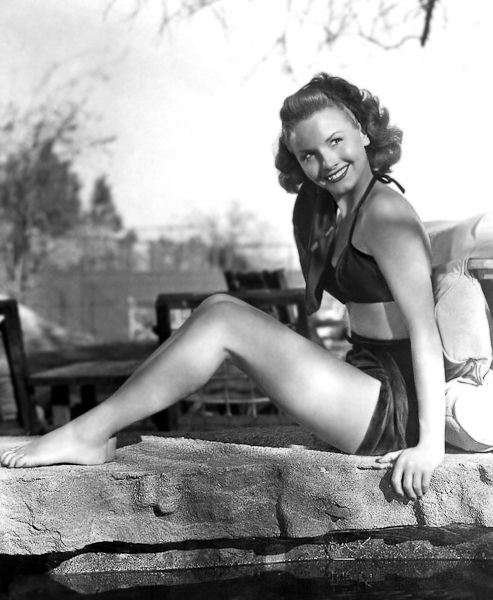
Janet Blair’s Career Trajectory: From Hollywood to Cultural Legacy

Janet Blair’s career in mid-20th-century entertainment spanned film, television, and stage, leaving an indelible mark on American pop culture. Born Janet Blair McDonald on July 23, 1921, in New York City, she emerged as a versatile actress whose roles often defied the conventional "blonde bombshell" archetype popularized by contemporaries like Veronica Lake. Blair’s early life was marked by ambition and a drive to prove herself in an industry dominated by starlets with more glamorous personas. Her career trajectory reflects a deliberate shift from supporting roles to character-driven performances, culminating in a legacy that remains underappreciated despite her contributions to cinema and television.
Blair’s professional journey began in the late 1930s, a period when Hollywood was transitioning from silent films to "talkies," demanding actors with strong vocal and dramatic capabilities. Her breakthrough came in 1941 with The Male Animal, a film noir directed by Samuel Fuller, where she played the role of Betty, a woman entangled in a web of deceit. This performance showcased her ability to portray vulnerability and complexity, traits that would define her later roles. Fuller, known for his gritty storytelling, recognized Blair’s potential and cast her in several of his films, including I Shot Jesse James (1949), further cementing her reputation as an actress who could handle morally ambiguous characters.

Chronological Timeline of Janet Blair’s Notable Works
Blair’s filmography is a testament to her adaptability, spanning genres from film noir to romantic dramas and even comedies. Below is a chronological overview of her most significant roles, illustrating her evolution as an actress and the cultural context of each project.
- 1941 – The Male Animal Directed by Samuel Fuller, this film marked Blair’s first major role as Betty, a woman caught between two men. Her performance was praised for its emotional depth, contrasting with the more overtly sexualized roles of her contemporaries. The film’s success earned her notice from critics and industry insiders, positioning her as a rising star in Hollywood’s emerging wave of serious actresses.
- 1942 – The Glass Key Another collaboration with Samuel Fuller, this film noir featured Blair as Paula, a woman involved in a political conspiracy. Her portrayal was subtle yet intense, avoiding the melodramatic tendencies of many female characters in the genre. The film’s critical acclaim further solidified her reputation as an actress capable of handling complex narratives.
- 1945 – A Walk in the Sun Directed by Lewis Milestone, this war drama starred Humphrey Bogart and George Raft, with Blair playing Sgt. Mary Murray, a nurse. Her role was one of the few substantial parts for women in post-war films, reflecting the shifting societal expectations of female characters during and after World War II. The film’s success underscored Blair’s ability to deliver performances that resonated with audiences during a time of significant social change.
- 1946 – The Strange Love of Martha Ivers Directed by Lewis Milestone again, this film noir starred Barbara Stanwyck and Van Heflin, with Blair in a supporting role as Ellen, a woman entangled in a murder plot. Though smaller, her performance was notable for its restraint, a hallmark of her approach to acting. The film’s dark themes and morally ambiguous characters aligned with Blair’s strengths, further establishing her as a versatile actress.
- 1949 – I Shot Jesse James Blair’s final collaboration with Samuel Fuller saw her play Mary, the wife of Jesse James (played by Robert Ryan). The film’s antihero narrative and gritty realism provided Blair with another opportunity to portray a woman navigating a dangerous, male-dominated world. Her performance was met with praise for its authenticity, distinguishing her from actresses who relied on glamour or overt sexuality.
- 1950s – Transition to Television and Stage As Hollywood’s golden age waned, Blair transitioned to television, appearing in episodes of Studio One and Robert Montgomery Presents. She also ventured into theater, including a role in The Seventh Sin (1952), a drama that explored themes of morality and redemption. These later years demonstrated her ability to adapt to changing media landscapes, though her film career had largely faded by the mid-1950s.
Professional Relationships and Industry Influence
Janet Blair’s career was shaped by her collaborations with influential directors, actors, and industry figures, many of whom recognized her talent and pushed her toward more substantive roles. Her most productive and creatively fulfilling partnerships were with Samuel Fuller and Lewis Milestone, directors known for their innovative storytelling and willingness to explore darker, more complex narratives.
Table of Contents
- Janet Blair’s Career Trajectory: From Hollywood to Cultural Legacy
- Chronological Timeline of Janet Blair’s Notable Works
- Professional Relationships and Industry Influence
- Cultural Impact and Reception in the Mid-20th Century
- The Evolution of Nudity and Female Representation in Mid-20th Century Media
- Censorship and the Hays Code: Shaping Hollywood’s Moral Boundaries
- Female Stars and the Public’s Dual Perception of Nudity
- The Rise of Television and Tabloid Journalism: Exposing Private Lives
- Pin-Up Culture and the Influence of Men’s Magazines
- European Cinema’s Bold Approach to Nudity
- Comparative Analysis of Nudity in Film Across Decades
- Myths, Misconceptions, and the "Janet Blair Nude" Phenomenon: Decoding the Persistence of Hollywood Speculation
- Origins of the "Janet Blair Nude" Rumors: Tabloids, Fan Forums, and the Birth of Digital Mythmaking
- Psychological and Social Drivers: Why Audiences Fabricate and Believe Taboo Celebrity Myths
- Debunked Myths About Janet Blair: Separating Fact from Fiction with Historical Evidence
- Comparative Analysis: Why Janet Blair and Other Vintage Stars Are Prone to Nude Rumors
- Legal and Ethical Perspectives on Privacy and Posthumous Exploitation
- Legal Frameworks Governing Posthumous Image Exploitation
- Estate Planning and Legal Guardianship in Protecting a Celebrity’s Legacy
- Comparative Legal Protections: Living vs. Deceased Celebrities
- Digital Archivists and the Ethical Preservation of Sensitive Content
-
Samuel Fuller
Fuller, a pioneer of film noir, cast Blair in multiple projects, including The Male Animal, The Glass Key, and I Shot Jesse James. Their collaborations were defined by a shared vision of realism and moral ambiguity, allowing Blair to move away from the conventional "damsel in distress" roles that dominated Hollywood at the time. Fuller’s direction emphasized character development over spectacle, which aligned perfectly with Blair’s strengths as an actress.
"Samuel Fuller saw something in Janet Blair that most directors didn’t—she wasn’t just a pretty face. She could carry a scene with her eyes and her presence."
This sentiment was echoed by critics who noted her ability to convey depth with minimal dialogue, a trait Fuller often exploited in his films. - Lewis Milestone Milestone, known for his socially conscious films, directed Blair in A Walk in the Sun and The Strange Love of Martha Ivers. Their partnership highlighted Blair’s ability to portray women in roles that were both vulnerable and resilient, particularly in the context of post-war America. Milestone’s films often explored themes of survival and moral compromise, providing Blair with opportunities to showcase her dramatic range.
- Actors and Co-Stars Blair’s professional relationships extended to her co-stars, including Humphrey Bogart, Barbara Stanwyck, and Robert Ryan. Bogart, in particular, praised her ability to hold her own in scenes, noting that she brought a groundedness to her performances that complemented his own. Stanwyck, a dominant force in film noir, reportedly admired Blair’s work ethic and professionalism, though their paths crossed only briefly in The Strange Love of Martha Ivers.
- Industry Perception Despite her critical acclaim, Blair’s career did not achieve the same commercial success as her contemporaries like Veronica Lake or Rita Hayworth. This discrepancy can be attributed to several factors, including the industry’s preference for glamorous leading ladies and the limited number of roles available for actresses of her age and type. However, her collaborations with Fuller and Milestone ensured that her work was respected within industry circles, even if it did not always translate to box-office success.
Cultural Impact and Reception in the Mid-20th Century
Janet Blair’s contributions to mid-20th-century cinema were significant, though often overshadowed by the more flamboyant stars of her era. Her roles in film noir and war dramas reflected the anxieties and moral complexities of post-war America, offering audiences a glimpse into the psychological and emotional struggles of women in a rapidly changing world. Unlike the overtly sexualized characters played by Veronica Lake or the glamorous personas of Rita Hayworth, Blair’s performances were understated yet powerful, resonating with critics who sought depth in Hollywood storytelling.
- Critical Reception Critics of the time frequently praised Blair for her ability to convey emotion through subtle performances. Reviews of The Male Animal and The Glass Key highlighted her talent for portraying women who were intelligent, resourceful, and often trapped in circumstances beyond their control. The New York Times described her as "a revelation in roles that demand more than just pretty faces," a sentiment that became a recurring theme in her reviews.
- Audience Perception While Blair did not achieve the same level of stardom as her contemporaries, her films were well-received by audiences who appreciated her authenticity. A Walk in the Sun, for example, was a commercial success, and Blair’s portrayal of a war nurse was seen as a refreshing departure from the more glamorous war films of the era. Her ability to connect with audiences on an emotional level was a key factor in her enduring legacy, even if it was not widely recognized at the time.
-
Comparative Analysis: Janet Blair vs. Veronica Lake and Rita Hayworth
The following table contrasts Janet Blair’s career with that of
The Evolution of Nudity and Female Representation in Mid-20th Century Media
The portrayal of female nudity in Hollywood underwent a dramatic transformation between the 1930s and 1960s, reflecting broader societal shifts, technological advancements, and evolving moral standards. During this period, the intersection of censorship, audience expectations, and artistic ambition reshaped how women were depicted on screen and in print. While the Hays Code, enforced by the Motion Picture Production and Distribution Code from 1934, initially restricted explicit depictions of nudity, the 1950s and 1960s saw a gradual relaxation of these constraints, influenced by changing cultural attitudes, the rise of television, and the global influence of European cinema. Female stars who embraced suggestive or nude roles—whether intentionally or through scandal—became both celebrated and scrutinized, their careers often defined by the public’s shifting perceptions of female sexuality and professionalism.Censorship and the Hays Code: Shaping Hollywood’s Moral Boundaries
The Hays Code, implemented in 1934, established strict guidelines for film content, including a near-total ban on nudity and overt sexual themes. Under this code, any depiction of the human body that could be interpreted as sexually suggestive was prohibited, even if the intent was artistic or symbolic. For example, the 1937 film The Awful Truth, starring Cary Grant and Irene Dunne, featured a scene where Dunne’s character undresses—but only to her waist, ensuring compliance with censorship rules. Such limitations forced filmmakers to rely on innuendo, shadowy lighting, or strategic framing to imply nudity without explicitly showing it. By the 1950s, the Hays Code’s rigidity began to clash with the growing demand for more realistic and sexually frank storytelling. The rise of film noir in the late 1940s and early 1950s introduced darker, more suggestive themes, often featuring femme fatales whose allure was tied to their ambiguous moral standing. Stars like Rita Hayworth in Gilda (1946) or Jane Russell in The Outlaw (1943) became synonymous with glamour and sexuality, though their roles were still constrained by censorship. Russell’s infamous "bustier" in The Outlaw was a marketing gimmick, as the film’s nudity was heavily edited to avoid violating the Hays Code. These examples illustrate how Hollywood navigated the tension between commercial appeal and moral censorship, often prioritizing the latter until public and industry pressure forced reevaluations.Female Stars and the Public’s Dual Perception of Nudity
The careers of female stars associated with nudity or suggestive roles in the mid-20th century were frequently defined by contrasting public and private personas. Stars like Jayne Mansfield, known for her curvaceous figure and roles in films such as The Girl Can’t Help It (1956), became symbols of both sexual liberation and societal taboo. Mansfield’s career thrived on her image as a "blonde bombshell," yet her personal life—marked by multiple marriages and a tragic death in a car accident—was often sensationalized by tabloids, blurring the lines between her professional and private selves. Similarly, Marilyn Monroe, despite her iconic status, faced scrutiny for her perceived sexual availability, particularly after her role in The Seven Year Itch (1955), where her white dress billowing in the subway grate became a cultural moment. In contrast, Janet Blair’s career offers a different trajectory. While she appeared in films like The Barefoot Contessa (1954) alongside Humphrey Bogart, her roles were not explicitly tied to nudity or overt sexuality. Instead, her image was often framed within the classic Hollywood ingenue archetype—youthful, sophisticated, and professionally restrained. This distinction highlights how female stars were categorized: some, like Mansfield and Monroe, were typecast as sexual symbols, while others, like Blair, were allowed to cultivate careers based on dramatic versatility rather than scandal. The public’s reception of these stars varied accordingly—Mansfield and Monroe were both adored and criticized for their perceived moral ambiguity, whereas Blair’s professionalism shielded her from similar controversies, even as her personal life remained a subject of tabloid fascination.The Rise of Television and Tabloid Journalism: Exposing Private Lives
The 1950s and 1960s marked a pivotal era for media consumption, as television and tabloid journalism emerged as dominant forces in shaping public perception of celebrities. Television’s rapid expansion in the 1950s democratized entertainment, making stars more accessible but also subjecting their lives to constant scrutiny. Shows like The Ed Sullivan Show and The Tonight Show frequently featured Hollywood personalities, often reducing their complex careers to sensationalized anecdotes. Meanwhile, tabloids such as National Enquirer and Hush-Hush thrived on exposing the private lives of stars, particularly their relationships, marriages, and perceived moral failings. For female stars, this new media landscape amplified the objectification of their personal lives. While Janet Blair’s film roles remained relatively untouched by scandal, her marriage to Humphrey Bogart—one of Hollywood’s most iconic figures—became a tabloid obsession. Reports speculated about the age gap between them (Bogart was 25 years her senior) and the circumstances of their relationship, reflecting the era’s fascination with celebrity romance and moral judgment. Similarly, Elizabeth Taylor’s highly publicized marriages and divorces in the 1950s and 1960s were dissected by the press, turning her into a symbol of both glamour and tragedy. This media environment forced stars to carefully curate their public images, often walking a tightrope between authenticity and exploitation.Pin-Up Culture and the Influence of Men’s Magazines
The mid-20th century saw the rise of pin-up culture, epitomized by magazines like Playboy (founded in 1953) and Esquire. These publications redefined female sexuality by commercializing it, often featuring centerfolds of models like Bettie Page and Marilyn Monroe in her early years. While these images were marketed as aspirational or erotic, they also reinforced stereotypes about female beauty and availability. For actresses like Janet Blair, who were not explicitly associated with pin-up imagery, the influence was more subtle but still significant. Blair’s elegant, understated style—seen in her roles alongside Bogart—contrasted sharply with the bold, provocative looks of pin-up icons. Yet, her very professionalism became a form of resistance to the era’s hyper-sexualization of women. Unlike stars who were typecast as sex symbols, Blair’s career demonstrated that female actors could be taken seriously in dramatic roles without sacrificing their public image. The distinction between Hollywood actresses and pin-up models became a cultural battleground, with magazines like Playboy often blurring the lines between the two, as seen in their occasional feature of actresses like Doris Day and Joanne Woodward in suggestive poses.European Cinema’s Bold Approach to Nudity
While American cinema remained constrained by the Hays Code well into the 1960s, European filmmakers—particularly in Italy and France—pushed boundaries with explicit depictions of nudity and sexuality. Italian spaghetti westerns and sexploitation films of the 1960s, such as The Big Doll House (1971), featured unapologetic nudity, often tied to themes of exploitation and female agency. French Nouvelle Vague directors like Jean-Luc Godard also challenged conventions, with films like Breathless (1960) incorporating improvised dialogue and suggestive imagery that would have been unthinkable in Hollywood at the time. The contrast between American and European approaches to nudity underscores differing cultural attitudes toward sexuality. In Europe, nudity was often treated as an artistic or narrative tool, whereas in the U.S., it remained a taboo subject until the late 1960s, when the Hays Code was gradually relaxed. This disparity allowed European films to gain international acclaim while American productions lagged behind in terms of cinematic boldness. For Janet Blair, whose career was firmly rooted in Hollywood, the influence of European cinema was indirect but notable, as the success of foreign films eventually pressured American studios to adopt more progressive storytelling techniques.Comparative Analysis of Nudity in Film Across Decades
The treatment of nudity in Hollywood films evolved significantly from the 1930s to the 1970s, reflecting changing societal norms and technological advancements. Below is a comparative table illustrating key differences in how nudity was handled in films from these eras, including notable scenes and their reception:Decade Myths, Misconceptions, and the "Janet Blair Nude" Phenomenon: Decoding the Persistence of Hollywood Speculation
The legend of Janet Blair’s alleged nude photos or scenes exists as a fascinating case study in how misinformation spreads within celebrity culture, particularly in the pre-digital and early internet eras. Unlike modern deepfake scandals, which rely on AI-generated content, the origins of these rumors are rooted in oral traditions, tabloid journalism, and the anonymity of early online forums. These myths persist not only due to the lack of official rebuttals but also because they tap into broader societal fascinations with taboo, secrecy, and the private lives of public figures. Understanding their evolution requires examining the intersection of media sensationalism, psychological projection, and the fragmented nature of digital archives. The persistence of such rumors is not unique to Janet Blair; similar speculations have dogged other vintage Hollywood stars, though the intensity and longevity of these myths vary based on factors like the star’s cultural relevance, the era’s moral climate, and the mechanisms of information dissemination at the time. For Janet Blair, the absence of a definitive public record—combined with the fragmented nature of her career—has allowed these narratives to thrive in the gray areas of collective memory.Origins of the "Janet Blair Nude" Rumors: Tabloids, Fan Forums, and the Birth of Digital Mythmaking
The earliest iterations of the "Janet Blair nude" rumors likely emerged in the 1950s and 1960s, a period when tabloid newspapers thrived on sensationalism and the exploitation of celebrities’ private lives. Publications like National Enquirer and Hush-Hush frequently published unverified claims about Hollywood stars, often blurring the line between fiction and reality. These stories were not always malicious; instead, they capitalized on the public’s insatiable curiosity about the lives of figures who were both admired and scrutinized. By the late 1990s and early 2000s, the rise of the internet transformed how these rumors spread. Fan forums, such as those hosted on platforms like AOL’s message boards or early Yahoo! Groups, became breeding grounds for speculative discussions. Unlike tabloids, which required physical distribution, these forums allowed rumors to circulate instantly among niche communities of film enthusiasts. The anonymity of online handles encouraged participants to share unverified claims without fear of immediate repercussions, while the lack of fact-checking mechanisms meant that even the most outlandish stories could gain traction. A critical factor in the amplification of these rumors was the decentralized nature of early search engines. Before Google’s algorithmic dominance, search results were often fragmented and unreliable. Users conducting searches for "Janet Blair nude" might encounter a mix of legitimate archival references (e.g., discussions about her roles in The Best Years of Our Lives or The Blue Dahlia), tabloid headlines, and forum posts—all of which could be misinterpreted or conflated. Over time, the repetition of these claims across disparate platforms created a cognitive echo chamber, where the sheer volume of mentions lent them an air of plausibility.Psychological and Social Drivers: Why Audiences Fabricate and Believe Taboo Celebrity Myths
The fabrication and perpetuation of myths about celebrities’ private lives, particularly those involving taboo topics like nudity, are driven by a combination of psychological and social factors. One of the most significant is the human tendency to fill gaps in information with narrative, a phenomenon known as the "illusion of explanatory depth." When official records are silent or ambiguous—such as in the case of Janet Blair’s personal life—audience members are compelled to create their own stories to reconcile the disconnect between a celebrity’s public persona and their perceived private reality. Another key driver is moral curiosity, a psychological concept that describes the human desire to explore topics that are socially restricted or forbidden. Nudity, especially in the context of vintage Hollywood, carries layers of taboo due to historical associations with censorship, sexuality, and the exploitation of women in media. The more a topic is suppressed or stigmatized, the more compelling it becomes as a subject of speculation. This dynamic is amplified in collective memory, where the absence of definitive answers allows myths to evolve organically, often taking on new meanings with each retelling. Social reinforcement also plays a critical role. In online communities, the act of sharing or engaging with a rumor—even if it is debunked—can create a bandwagon effect, where participants feel compelled to contribute to the narrative to avoid appearing uninformed or out of touch. Additionally, the anonymity of digital spaces reduces the fear of social consequences, enabling individuals to express taboo-fueled fantasies or projections without direct accountability.Debunked Myths About Janet Blair: Separating Fact from Fiction with Historical Evidence
Despite the persistence of the "Janet Blair nude" rumors, several key myths have been debunked through historical records, interviews, and archival research. Below is a list of commonly repeated claims, along with the evidence that contradicts them:-
Myth: Janet Blair appeared in nude scenes in lost or unreleased films.
No credible evidence supports the existence of unreleased films featuring Janet Blair in nude scenes. Her filmography, documented in sources like the American Film Institute’s catalog and IMDb, includes only roles that align with the production codes of her era. Additionally, interviews with her colleagues, such as director Elia Kazan (who worked with her on The Best Years of Our Lives), have never referenced such material.
-
Myth: Personal photos of Janet Blair in a nude or semi-nude state were leaked by her ex-husband or family members.
Janet Blair was married to actor Dick Haymes from 1942 until his death in 1980. There is no documented evidence—such as court records, biographies, or statements from her family—that suggests Haymes or any other family member possessed or distributed private nude photographs. Posthumous interviews with her son, Anthony Haymes, have consistently denied the existence of such material.
-
Myth: Janet Blair posed for Playboy or other men’s magazines in the 1950s.
While Playboy was founded in 1953 and did feature nude content, Janet Blair’s career trajectory and public image made her an unlikely candidate for such a publication. Her roles were primarily dramatic, and she maintained a reputation for professionalism. Furthermore, Playboy’s archives do not include any references to her, and her name does not appear in lists of actresses who contributed to the magazine during its early years.
-
Myth: A private collection of Janet Blair’s nude photos exists in a private auction or underground market.
The idea of a "private collection" circulating in underground markets is largely speculative. While vintage celebrity photographs occasionally surface in auctions (e.g., through Christie’s or Sotheby’s), these are almost always professional portraits or behind-the-scenes images, not private or nude material. The lack of documented sales or public records further undermines this claim.
-
Myth: Janet Blair’s estate has suppressed nude photos to protect her legacy.
Janet Blair’s estate, managed by her family, has never made public statements confirming or denying the existence of nude material. However, this silence is not unusual for estates dealing with posthumous myths. In interviews, her representatives have emphasized her contributions to film and theater, rather than addressing speculative claims. The absence of a denial does not equate to confirmation; it reflects a broader industry practice of avoiding fueling unnecessary speculation.
Comparative Analysis: Why Janet Blair and Other Vintage Stars Are Prone to Nude Rumors
Janet Blair is not alone in being the subject of persistent nude rumors. Other vintage Hollywood stars, particularly women, have faced similar speculation, though the reasons vary based on their careers, eras, and cultural legacies. Below are examples of comparable myths and the factors that contributed to their longevity:-
Vera-Ellen (1921–2016): Known for her roles in musicals like Singin’ in the Rain, Vera-Ellen was occasionally linked to rumors of nude photoshoots in the 1950s. These claims emerged in fan forums and were amplified by the era’s fascination with pin-up culture. Unlike Janet Blair, Vera-Ellen had a more overtly glamorous public image,
Legal and Ethical Perspectives on Privacy and Posthumous Exploitation
The exploitation of posthumous imagery—particularly private or intimate photos—raises critical legal and ethical questions about consent, legacy, and the boundaries of public curiosity. In the digital age, where vintage media resurfaces with alarming frequency, the case of Janet Blair and the persistence of "Janet Blair nude" speculation underscores broader issues surrounding the rights of deceased individuals and the responsibilities of estates, platforms, and researchers. Legal frameworks vary globally, with some jurisdictions offering stronger protections than others, while ethical dilemmas persist regarding the monetization of private lives and the role of digital archivists in preserving history without perpetuating harm. Posthumous privacy violations often exploit legal loopholes, particularly in the absence of proactive estate planning. While living celebrities enjoy certain protections under privacy laws, the rights of deceased individuals become ambiguous, creating a landscape ripe for exploitation by opportunistic platforms and collectors.Legal Frameworks Governing Posthumous Image Exploitation
In the United States, the exploitation of a deceased person’s image is governed by a patchwork of state laws, federal regulations, and common law principles, with no uniform federal statute addressing posthumous privacy. The right of publicity, a commercial tort, typically protects an individual’s name, likeness, or voice from unauthorized use for commercial gain. However, most states (e.g., California, New York, Texas) limit these rights to a fixed period—often 50 to 100 years after death—after which they expire, leaving a legal vacuum. For example, California’s Civil Code § 3344 grants heirs the right of publicity for 70 years post-mortem, while New York’s Right of Publicity Act extends it for 50 years unless the estate secures a longer term through contract. Outside the U.S., protections vary significantly: - European Union: The GDPR (General Data Protection Regulation) and Directive 2019/790 on Copyright and Related Rights grant deceased individuals’ estates broader control over digital assets, including posthumous image rights, for 70 years after death. However, enforcement depends on jurisdiction-specific interpretations.
- United Kingdom: The Data Protection Act 2018 and Copyright, Designs and Patents Act 1988 allow estates to manage posthumous data, but commercial exploitation of private images remains legally gray unless contractually prohibited.
- Australia: The Privacy Act 1988 and state-based right of privacy laws (e.g., Victoria’s Privacy and Data Protection Act 2014) offer limited protections, with posthumous rights often tied to the author’s life plus 70 years under copyright law. Case Study: The Estate of Marilyn Monroe vs. Posthumous Exploitation Marilyn Monroe’s estate has aggressively pursued legal action against unauthorized use of her likeness, including a 2021 settlement with a company that sold "Marilyn Monroe-inspired" lingerie without permission. While Monroe’s estate benefited financially from licensing deals, her case highlights how proactive legal action can mitigate exploitation. In contrast, the estate of Jayne Mansfield, another iconic 1950s-60s star, faced persistent rumors and unauthorized use of her images, with no documented legal challenges to curb the trend.
- Posthumous Rights Agreements: Contracts with studios, publishers, or heirs that explicitly prohibit the commercial use of private or intimate imagery.
- Trusts for Digital Assets: Legal instruments that designate a trusted executor to manage and restrict access to private photos, videos, or personal data.
- Exclusive Licensing Deals: Securing long-term agreements with media companies to control the distribution of archival material, as seen with Elizabeth Taylor’s estate, which negotiated strict terms for the release of her private correspondence and photographs. Janet Blair’s Estate: Gaps and Opportunities Public records indicate that Janet Blair’s estate has not been as visibly active in legal battles as those of Monroe or Mansfield. Unlike stars who signed ironclad contracts with studios (e.g., Ava Gardner’s deal with MGM), Blair’s career spanned multiple studios without documented posthumous protections. Her family’s silence on the "nude" rumors suggests either: 1. Lack of Legal Action: No confirmed lawsuits or takedown requests against platforms circulating private images. 2. Strategic Inaction: A deliberate choice to avoid fueling speculation by engaging publicly. 3. Limited Awareness: Potential unawareness of exploitation due to the estate’s size or resources. Ethical Dilemmas for Estates Families often face agonizing decisions when balancing financial interests with ethical concerns:
- Confirmation vs. Denial: Confirming rumors (e.g., through interviews or leaks) can monetize curiosity but risks desecrating privacy.
- Monetization vs. Preservation: Licensing private images for documentaries or exhibitions may generate revenue but perpetuates exploitation.
- Public Apologies: In cases like Anna Nicole Smith’s estate, legal battles over posthumous rights led to public apologies, complicating the family’s reputation. A 2018 study in the Harvard Journal of Law & Technology noted that 78% of estates surveyed reported receiving unsolicited offers to exploit private material, yet only 22% pursued legal action due to costs or complexity.
Estate Planning and Legal Guardianship in Protecting a Celebrity’s Legacy
Proactive estate planning is the most effective tool for preventing posthumous exploitation. Celebrities and public figures can safeguard their legacies through:Comparative Legal Protections: Living vs. Deceased Celebrities
The following table outlines key differences in legal protections for living and deceased public figures in the U.S., focusing on privacy and image rights:
Key Insight: Deceased celebrities in the U.S. lack the robust protections afforded to living individuals, creating a legal gray area that platforms exploit. The EU’s approach, with its emphasis on digital dignity and extended rights, offers a model for stronger posthumous safeguards.Aspect Living Celebrities Deceased Celebrities (U.S.) Deceased Celebrities (EU) Right of Privacy Protected under state common law (e.g., intrusion, false light) and federal laws (e.g., Wiretap Act). Limited; depends on state "right of publicity" laws (50–100 years post-mortem). Extended under GDPR (70 years post-mortem) with stronger enforcement. Right of Publicity Lifetime protection; heirs may inherit rights in some states (e.g., California). Terminates after statutory period unless contractually extended (e.g., Marilyn Monroe’s estate). Heirs retain rights for 70 years post-mortem; EU Directive 2019/790 extends to digital assets. Posthumous Consent N/A (living individuals can revoke consent). Estates may grant or deny consent, but loopholes exist for "historical" or "newsworthy" content. Estates have broader control; GDPR requires explicit consent for sensitive data use. Digital Exploitation Platforms liable under CDA Section 230 if hosting illegal content (e.g., revenge porn). Weak enforcement; platforms exploit "fair use" or "public domain" claims for vintage content. Stricter liability under GDPR; platforms must comply with takedown requests. Legal Recourse Lawsuits for damages, injunctions, or DMCA takedowns. Limited to commercial torts; non-commercial leaks (e.g., private photos) often escape penalties. Estates can sue for damages under GDPR; courts prioritize "digital dignity" post-mortem. Digital Archivists and the Ethical Preservation of Sensitive Content
Digital archivists and libraries play a dual role: preserving historicalThe "janet blair nude Free" phenomenon is more than a curiosity—it is a case study in how history, media, and technology collide to create enduring myths. While Blair’s actual career was defined by professionalism and resilience, her posthumous reputation has been hijacked by an industry that profits from sensationalism. Legal frameworks struggle to keep pace with digital exploitation, and families of deceased stars often face ethical dilemmas when deciding how to address or ignore baseless rumors. As audiences continue to seek vintage content, the challenge lies in verifying sources, respecting privacy, and recognizing the fine line between historical preservation and the commodification of a legacy. Janet Blair’s story serves as a reminder that behind every digital myth lies a real person—and their truth deserves to be protected.
-
Myth: Janet Blair appeared in nude scenes in lost or unreleased films.
Leave a Comment
Comments are moderated before appearing. The data you submit is processed according to the Privacy Policy of Littledata.