I Know What You Did Last Summer 1997 Revived Horror Forever
When I Know What You Did Last Summer hit theaters in 1997, it didn’t just resurrect the slasher genre—it redefined it. A decade after the horror slump of the early '90s, this film injected fresh dread into cinemas, blending teen angst with primal terror unlike anything seen since Halloween or Friday the 13th. Its mystery-driven plot, where the killer remained unseen for nearly 90 minutes, shattered expectations and turned audiences into armchair detectives, dissecting every frame for clues.
The movie’s cultural ripple effect extended beyond box office numbers, seeping into music, TV, and even legal debates about media violence. While studios like New Line Cinema bet big on teen horror with Scream and Urban Legend, I Know What You Did Last Summer carved its niche by weaponizing silence, suggestion, and a villain as ancient as guilt itself. Its low-budget ingenuity—from practical shark effects to eerie sound design—proved that horror’s most terrifying weapon wasn’t gore but the human mind’s capacity to fear the unknown.
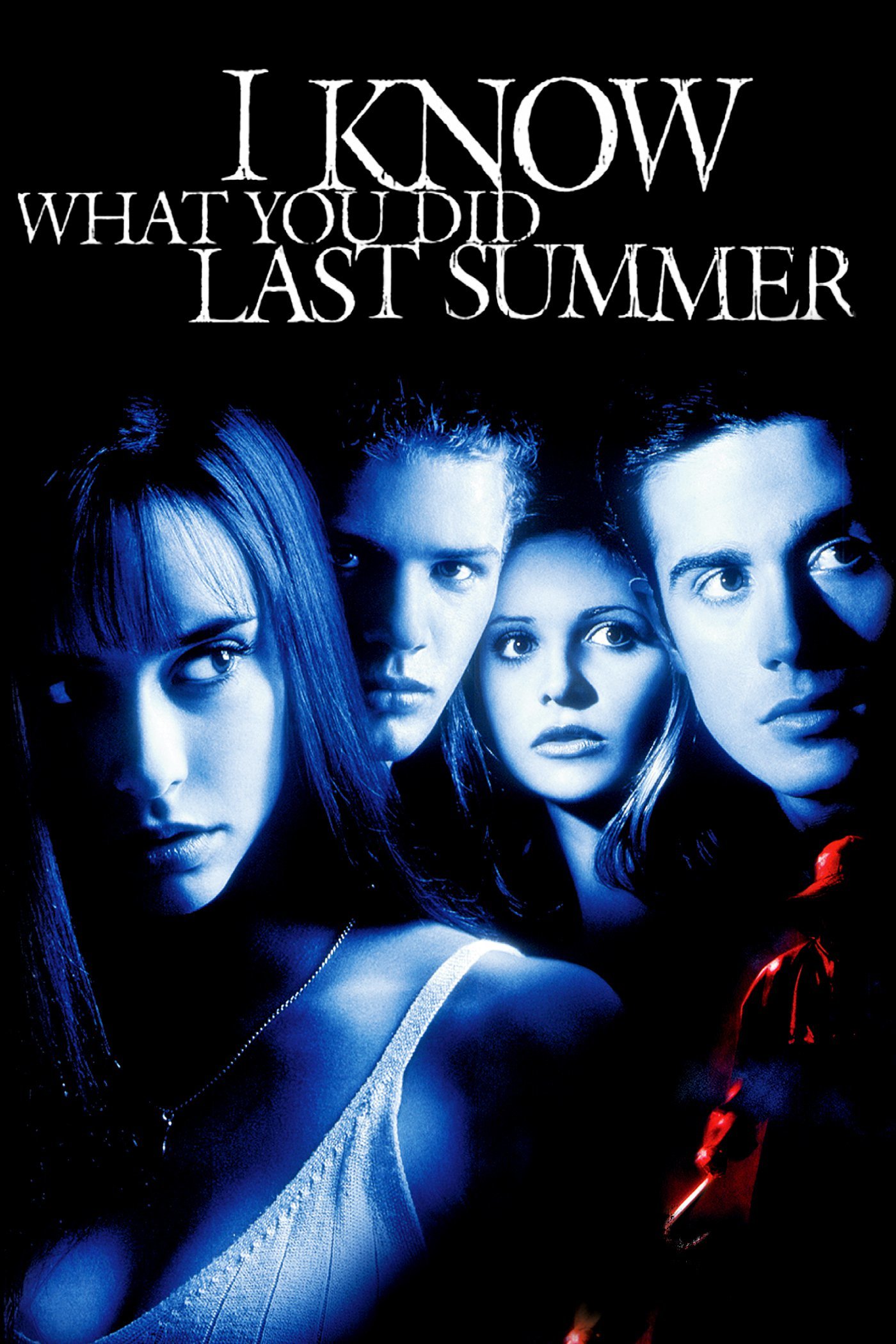
The Cultural Impact of I Know What You Did Last Summer (1997) on Horror and Teen Films
I Know What You Did Last Summer (1997) emerged as a defining force in late-'90s horror cinema, revitalizing the slasher genre with a blend of psychological tension, moral ambiguity, and a fresh narrative approach. Unlike its predecessors—such as Friday the 13th (1980) or Halloween (1978)—which relied on masked killers and straightforward revenge plots, this film introduced a layered mystery, shifting the focus from the killer to the guilt-ridden survivors. Its success marked a turning point where horror films began incorporating teen drama, moral dilemmas, and a more introspective tone, influencing both box office trends and cultural conversations about media violence. The film’s marketing strategies further cemented its place in pop culture, blending intrigue with interactive audience engagement, while its legacy extended into music, television, and later horror franchises.
Reviving the Slasher Genre with Psychological Depth and Moral Ambiguity

The slasher genre had experienced a decline in mainstream appeal by the mid-'90s, overshadowed by horror-comedies like Scream (1996) and the rise of supernatural thrillers such as The Craft (1996). I Know What You Did Last Summer revitalized the subgenre by introducing a narrative structure centered on guilt, paranoia, and the consequences of a single, irreversible act. Unlike traditional slashers, where the killer’s identity was often revealed early, this film withheld critical information, forcing audiences to piece together clues alongside the characters. The shift from a singular, vengeful killer to a more ambiguous antagonist—represented by the eerie figure of the "Hook Man"—reflected a broader evolution in horror storytelling, prioritizing atmosphere and character development over shock value.
The film’s success demonstrated that audiences craved horror with emotional stakes, a trend that would later define the "New Scream" era and films like The Blair Witch Project (1999). Its departure from the "final girl" trope—where the protagonist is often the sole survivor—also challenged gender dynamics in horror, presenting a group of teens whose survival hinged on their ability to confront their shared trauma rather than outrun a predator. This narrative innovation not only differentiated I Know What You Did Last Summer from its predecessors but also set a precedent for future horror films that balanced suspense with character-driven drama.
Key Horror and Teen Films of the Late '90s and Their Comparative Influence
The release of I Know What You Did Last Summer coincided with a surge of horror and teen films that redefined the genre’s landscape. Below is a timeline of notable releases between 1995 and 1999, highlighting their box office performance, cultural reception, and lasting influence:
Table of Contents
- The Cultural Impact of I Know What You Did Last Summer (1997) on Horror and Teen Films
- Reviving the Slasher Genre with Psychological Depth and Moral Ambiguity
- Key Horror and Teen Films of the Late '90s and Their Comparative Influence
- Innovative Marketing Strategies: Mystery, Interactivity, and the "Who Did It?" Campaign
- Impact on Teen Audiences: Fan Theories, Urban Legends, and Media Debates
- Behind-the-Scenes: Filmmaking Techniques and Innovations in I Know What You Did Last Summer
- Practical Effects and CGI Integration in the Shark Attack Scenes
- Sound Design and the Use of Silence in Building Suspense
- Filming Locations and Their Role in Creating Atmosphere
- Script Revisions and Editing Choices for Heightened Tension
- Low-Budget Constraints and Creative Solutions
- Character Analysis: The Protagonists and Their Evolution in the Slasher Genre
- Archetypal Roles and Psychological Breakdowns of the Four Protagonists
- Julie’s Subversion of the Final Girl Trope and Themes of Redemption
- Group Dynamics: Comparing I Know What You Did Last Summer to Scream and Urban Legend
- The Shark as Villain: Symbolism, Fear, and the Horror of the Unknown
- Symbolism of the Shark: Primal Fears and the Past Resurfacing
- Unseen Threat: The Shark’s Presence as Psychological Warfare
- Design and Aesthetics: The Shark as a Non-Human Menace
- Cultural Context: Sharks in Horror and Real-Life Fascination
The films released in this period often shared thematic or stylistic similarities with I Know What You Did Last Summer, particularly in their use of mystery, teen protagonists, and moral complexity. For instance, Scream (1996) revitalized the slasher genre by self-aware meta-commentary, while The Faculty (1998) blended teen drama with supernatural horror. Urban Legend (1998) and I Still Know What You Did Last Summer (2006, the sequel) further capitalized on the "who did it?" premise, though the latter struggled to recapture the original’s impact. Meanwhile, The Blair Witch Project (1999) pushed boundaries with its found-footage format, proving that horror could thrive on authenticity and audience participation.
Box office performance varied significantly: - Scream grossed $173 million worldwide, becoming a cultural phenomenon and spawning a franchise. - I Know What You Did Last Summer earned $103 million, solidifying its place as a sleeper hit. - Urban Legend made $47 million, while The Faculty brought in $28 million, reflecting the genre’s shifting market dynamics. - The Blair Witch Project initially underperformed in theaters but later became a $248 million grosser through word-of-mouth and home video, demonstrating the power of grassroots marketing.
These films collectively signaled a shift toward horror that engaged audiences intellectually and emotionally, rather than relying solely on jump scares or gore.
Innovative Marketing Strategies: Mystery, Interactivity, and the "Who Did It?" Campaign
The marketing of I Know What You Did Last Summer was a masterclass in creating intrigue and audience participation, deviating from the typical horror promotional tactics of the era. Traditional horror posters often relied on bold, blood-soaked imagery (e.g., Halloween’s mask or Friday the 13th’s machete-wielding killer), but this film’s campaign emphasized mystery and ambiguity. The tagline "Who Did It?" became central to its identity, encouraging audiences to speculate and theorize about the killer’s identity long before the film’s release.
One of the most innovative strategies was the "Mystery Poster" campaign, which featured a distorted, shadowy figure with the tagline "You won’t know who to trust" and "This summer, the truth will come out." The design avoided revealing the killer’s appearance, instead focusing on the psychological unease of the characters. Below is a descriptive mock-up of a 1997-era teaser poster, structured in HTML table format for visualization:
| I KNOW WHAT YOU DID LAST SUMMER | |
| THE TRUTH WILL COME OUT | |
|
|
|
Four friends. One deadly secret. This summer, the truth will surface. |
|
|
STARRINGJennifer Love HewittFreddie Prinze Jr.Ryan PhillippeSarah Michelle Gellar |
|
|
DIRECTED BYJim Gillespie |
|
The poster’s design emphasized negative space and distortion, reinforcing the film’s themes of hidden guilt and paranoia. Additionally, the marketing campaign included interactive elements, such as: - Midnight screenings with no trailers, allowing the film’s mystery to remain intact until the audience experienced it firsthand. - "Who Did It?" contests in movie theaters, where attendees could submit theories about the killer’s identity for prizes. - Viral-style rumors spread through word of mouth, with some theaters reporting lines of teens speculating about the film’s ending.
These strategies not only generated buzz but also positioned I Know What You Did Last Summer as an event film, a rarity for horror releases at the time.
Impact on Teen Audiences: Fan Theories, Urban Legends, and Media Debates
The film’s release sparked widespread engagement among teen audiences, who embraced its mystery and moral dilemmas. Fan theories about the killer’s identity proliferated online and in schoolyards, with some speculating that the Hook Man was a vengeful spirit, a local
Behind-the-Scenes: Filmmaking Techniques and Innovations in I Know What You Did Last Summer
The success of I Know What You Did Last Summer (1997) as a defining slasher film of the late '90s lies not only in its gripping narrative and cultural resonance but also in its groundbreaking technical execution. Director Jim Gillespie and his team employed innovative filmmaking techniques to create a sense of dread, realism, and suspense that set the film apart from its predecessors. From the meticulous crafting of underwater shark attacks to the strategic use of sound design, every detail was engineered to heighten tension. The film’s production also faced logistical challenges, including adverse weather conditions and budget constraints, which further influenced its creative approach. The result was a movie that balanced low-cost production with high-impact visuals, proving that ingenuity could rival expensive effects.
Practical Effects and CGI Integration in the Shark Attack Scenes
The shark attack sequences in I Know What You Did Last Summer were a technical marvel, blending practical effects with early CGI to create a terrifying underwater predator. The filmmakers avoided relying solely on computer-generated imagery, instead opting for a hybrid approach that enhanced realism. The process began with the creation of a full-scale animatronic shark, designed to move realistically in water. This shark, measuring over 12 feet long, was built with a flexible spine and articulated fins to mimic the fluid motion of a great white. However, filming with the animatronic alone posed challenges due to its weight and the difficulty of maneuvering it in water. To overcome this, the production team used a combination of underwater filming techniques and post-production enhancements.
The integration of CGI played a crucial role in refining the shark’s appearance and movements. While the animatronic provided the physical presence of the shark, CGI was used to smooth out its transitions, adjust proportions, and add subtle details like water distortion around its body. The animatronic was often filmed in close-up shots, where its physical presence felt more tangible, while wider or more dynamic shots incorporated CGI to maintain consistency. For example, the iconic scene where the shark drags Helen (Sarah Michelle Gellar) underwater was achieved by filming the animatronic in a water tank, with CGI later enhancing the water’s texture and the shark’s movement to create a seamless effect. The team also used a technique called "motion capture" for certain sequences, where the animatronic’s movements were recorded and later applied to a digital model for finer control.
Sound Design and the Use of Silence in Building Suspense
Sound design in I Know What You Did Last Summer was instrumental in establishing the film’s eerie atmosphere, with an emphasis on silence, ambient noises, and precise audio cues to unnerve the audience. The opening scene, where the group of friends is canoeing at night, exemplifies this approach. The filmmakers leveraged the power of silence to create tension, followed by sudden, jarring sound effects that heighten the sense of danger. For instance, the iconic "drip-drip" audio cue, which marks the shark’s presence, is a deliberate use of diegetic sound—water dripping from the canoe—paired with an unsettling lack of visual confirmation. This technique forces the audience to listen closely, making every sound feel ominous.
Below is a transcription of the first 30 seconds of the film’s audio, with key sound effects marked for analysis:
The absence of dialogue in these first 30 seconds allows the audience to focus on the environment, making every sound feel loaded with potential threat. The "drip-drip" effect, repeated at intervals, creates a rhythmic pattern that becomes increasingly unsettling. This audio technique was later replicated in other slasher films, cementing its place in horror cinema. The film’s sound team also utilized binaural recording, where microphones captured sound in a way that mimicked human hearing, further immersing the audience in the scene.
Filming Locations and Their Role in Creating Atmosphere
The choice of filming locations in I Know What You Did Last Summer was pivotal in establishing the film’s haunting tone. The primary setting, Tybee Island in Georgia, was selected for its natural beauty and the eerie allure of its coastal environment. Tybee Island’s marshy wetlands, dense forests, and expansive beaches provided the perfect backdrop for the film’s themes of isolation and danger. The production team faced significant challenges while filming in this location, including unpredictable weather and logistical hurdles. For instance, the crew often encountered sudden rainstorms and high winds, which disrupted shooting schedules and required quick adaptations. Permits for filming in certain areas were also difficult to secure, particularly in protected wildlife zones, which added to the production’s complexity.
Despite these obstacles, the locations contributed immensely to the film’s atmosphere. The marshes, with their murky waters and towering reeds, became a symbol of the shark’s hidden presence, while the abandoned houses and overgrown paths added to the sense of decay and foreboding. The beach scenes, particularly those shot at night, utilized natural lighting to create long shadows and an unsettling glow, enhancing the film’s visual storytelling. The production design team also incorporated local flora and fauna, such as Spanish moss and alligators, to reinforce the Southern Gothic aesthetic. These elements were not just decorative; they were integral to the film’s narrative, grounding the supernatural threat in a tangible, recognizable environment.
Script Revisions and Editing Choices for Heightened Tension
The final cut of I Know What You Did Last Summer underwent significant changes from its original script, with editing playing a crucial role in sharpening the film’s pacing and suspense. The script’s initial tone was more dialogue-heavy, with extended conversations among the characters that slowed the narrative momentum. However, the editing process streamlined these exchanges, replacing them with tension-filled silences and implied threats. For example, an early draft of the script included a longer scene where the friends discussed their fears about the shark, but the final cut condensed this into a brief, uneasy exchange, allowing the audience to fill in the gaps with their imagination.
Below is a comparison of a script excerpt and its final dialogue to illustrate this shift:
Original Script Excerpt: JULIE: "You guys are being ridiculous. There’s no way a shark could have followed us this far inland." HELEN: "It’s not inland. We’re still close to the ocean. And you saw the bite marks on the canoe." BARRY: "Okay, so what? Sharks don’t just follow people. It was probably just some old shark story." HELEN: "Barry, the shark attacked us. It dragged me underwater. I saw its teeth."
Final Film Dialogue: HELEN: "It wasn’t just a story. I saw it. I saw its teeth." JULIE: (whispers) "Then why didn’t you scream?" HELEN: (shaking) "Because it was underwater."
The final dialogue removes unnecessary exposition and focuses on the characters’ immediate fear, creating a more immediate and visceral reaction. The editing also introduced longer takes and tighter framing to emphasize the characters’ vulnerability. For instance, the scene where Helen is pursued by the shark in the woods was originally shot with more frequent cuts, but the final version used long, unbroken shots to heighten the sense of relentless pursuit. These changes were not just stylistic; they were strategic, ensuring that every scene contributed to the film’s mounting tension.
Low-Budget Constraints and Creative Solutions
With a reported budget of $12 million—a modest sum for a major studio release at the time—I Know What You Did Last Summer faced the challenge of delivering high-impact visuals without excessive spending. The production team’s response was to leverage practical effects, natural lighting, and improvisational acting to maximize their budget. One of the most notable examples of this approach was the use of animatronics for the shark, which, while expensive to build, required no additional costs for reshoots or digital enhancements. The film’s reliance on real locations, such as Tybee Island, also saved on set construction costs while adding authenticity to the setting.
The low-budget constraints also influenced the film’s use of CGI, which was kept minimal and focused on enhancing practical effects rather than replacing them. For example, the shark’s digital enhancements were limited to smoothing out its movements and adding subtle details, rather than creating entirely computer-generated sequences. This approach not only saved money but also
Character Analysis: The Protagonists and Their Evolution in the Slasher Genre
I Know What You Did Last Summer (1997) redefined the slasher genre by introducing protagonists whose moral ambiguity and psychological depth challenged traditional horror tropes. Unlike earlier slasher films where victims were often one-dimensional or defined by archetypal roles—such as the promiscuous final girl in Halloween (1978) or the innocent survivor—this film’s quartet of characters (Julie James, Helen Shivers, Barry Cox, and Ray Bronson) embody complex, flawed individuals whose backstories and motivations drive the narrative. Their evolution reflects a shift in teen horror toward psychological realism, where guilt, denial, and collective trauma shape survival rather than mere physical prowess or moral purity.
The film subverts classic horror archetypes by framing its protagonists as perpetrators of a crime they initially deny, forcing audiences to question their sympathies before the revelation of the killer’s identity. Julie, often mislabeled as the "final girl," begins as an unsympathetic character whose guilt over the accidental drowning of a classmate (Paige) mirrors the audience’s own complicity in the crime. This inversion of the final girl trope—where the survivor is not inherently virtuous—introduces themes of redemption and consequence, distinguishing the film from earlier slashers where the final girl’s purity was a prerequisite for survival.
Archetypal Roles and Psychological Breakdowns of the Four Protagonists
The four main characters in I Know What You Did Last Summer occupy roles that align with—and simultaneously subvert—established slasher archetypes. Below is a comparative analysis of their traits against classic horror figures, followed by a psychological exploration of their motivations and fears.
The following table maps their attributes against traditional slasher archetypes, highlighting deviations and innovations:
| Character | Classic Slasher Archetype | Role in I Know What You Did Last Summer | Key Psychological Traits | Motivations | Fears |
|---|---|---|---|---|---|
| Julie James | Final Girl (often pure, resourceful) | Unsympathetic survivor with guilt over Paige’s death | Self-loathing, denial, paranoia, moral conflict | To escape punishment for her role in the accident; to reclaim innocence | Being exposed as complicit in Paige’s death; the killer’s vengeance |
| Helen Shivers | The Promiscuous Victim (doomed by sexuality) | Repressed sexuality; internalizes societal shame | Guilt over her affair with Ray, self-doubt, repression | To suppress her past mistakes and maintain respectability | Judgment from her family and community; the killer’s targeting of her "sin" |
| Barry Cox | The Jock (often arrogant, physically dominant) | Alcoholic with a self-destructive streak | Self-loathing, alcoholism, avoidance of responsibility | To numb his guilt and escape consequences | Losing control (literally and figuratively); the killer’s physical dominance |
| Ray Bronson | The Outsider (often morally ambiguous or criminal) | Ex-con with a violent past; Helen’s secret lover | Paranoia, defensiveness, suppressed rage, loyalty to Helen | To protect Helen and avoid legal repercussions for his past | Being cornered by authority figures; the killer’s brutality |
Key Observations from the Table: The characters’ traits deconstruct traditional slasher roles. Julie’s guilt and self-loathing replace the final girl’s purity, while Helen’s repressed sexuality challenges the trope of the promiscuous victim as purely deserving of punishment. Barry’s alcoholism and self-destruction redefine the "jock" archetype, and Ray’s violent past complicates the outsider’s role beyond mere villainy. These deviations create a more nuanced dynamic where the characters’ internal conflicts drive the horror, rather than external threats alone.
Julie’s Subversion of the Final Girl Trope and Themes of Redemption
Julie James is the most overt subversion of the final girl archetype, a figure typically defined by her purity, resourcefulness, and moral uprightness. In I Know What You Did Last Summer, Julie is introduced as a character whose initial actions—leaving Paige to drown rather than admit responsibility—make her actively complicit in the crime. This deviation forces the audience to confront uncomfortable questions: Can a flawed, guilty character be a hero? and Is survival contingent on moral redemption rather than innate virtue?
Julie’s psychological journey is rooted in denial and guilt. Her refusal to acknowledge Paige’s death stems from a fear of consequences, both social and legal. Her backstory—revealed through flashbacks—paints her as a privileged teen whose privilege shields her from immediate accountability, but whose guilt festers beneath the surface. The film’s opening scene, where Julie and her friends bury Paige’s body, establishes her as a perpetrator rather than a victim, a role that persists until her confrontation with the killer forces her to confront her actions.
Key Scenes Defining Julie’s Arc: - The Opening Burial: Julie’s passive role in the burial (she is the last to throw dirt on Paige’s body) symbolizes her emotional detachment and denial. - The Nightmare Sequence: Julie’s recurring nightmare of Paige’s drowning reflects her subconscious guilt, a trope used to externalize her psychological torment. - The Confession to Helen: When Julie admits her role in Paige’s death, her breakdown marks the beginning of her redemption, as she transitions from denial to acceptance. - Final Confrontation with the Killer: Julie’s survival is tied to her emotional honesty; she must acknowledge her guilt to move forward, subverting the trope of the final girl’s purity as a prerequisite for survival.
The film’s exploration of redemption is further emphasized by the killer’s identity—Paige’s brother, David. His vengeance is not just physical but psychological, targeting the group’s collective guilt. Julie’s survival hinges on her ability to reconcile with her past, a theme rare in slashers where final girls often survive through luck or skill alone.
Group Dynamics: Comparing I Know What You Did Last Summer to Scream and Urban Legend
While I Know What You Did Last Summer shares thematic elements with other 1990s teen horror films like Scream (1996) and Urban Legend (1998), its group dynamics differ significantly in terms of chemistry, individual flaws, and narrative cohesion. Below is a comparative analysis of how these films handle ensemble casts and character interactions.
Group Chemistry and Flaws: - I Know What You Did Last Summer: The four protagonists are bound by a shared secret rather than a shared enemy, creating a tension that is psychological as much as it is physical. Their flaws—Julie’s guilt, Helen’s repression, Barry’s alcoholism, and Ray’s violence—create a toxic dynamic that mirrors their collective denial. The film’s horror stems from their inability to trust each other, as each character hides their own secrets. For example, Helen’s affair with Ray is a source of tension, while Barry’s drinking exacerbates his self-destructive tendencies. The group’s disintegration is gradual, with each member’s flaw contributing to the unraveling of their friendship.
- Scream (1996): The characters in Scream are defined by their adherence to horror movie tropes, with each victim embodying a cliché (the jock, the slut, the nerd). Their flaws are exaggerated for comedic and ironic effect, and their deaths serve as meta-commentary on horror conventions. Unlike I Know What You Did Last Summer, Scream’s group dynamic is more about external threats (the Ghostface killer) than internal conflicts. The survivors (Sidney Prescott and Dewey Riley) bond through their shared experience of being targeted, rather than through psychological introspection.
- Urban Legend (1998): Urban Legend presents a more fragmented ensemble, where the characters are loosely connected by their attendance at the same college and their encounters with urban myths. Their flaws are often superficial (vanity, recklessness), and the horror stems from external supernatural forces rather than internal
The Shark as Villain: Symbolism, Fear, and the Horror of the Unknown
The shark in I Know What You Did Last Summer (1997) transcends its role as a mere antagonist, embodying a primal and existential threat that lingers beyond the screen. Unlike traditional slashers where killers like Jason Voorhees or Michael Myers embody humanized malevolence, the shark represents an untamed force of nature—an embodiment of guilt, the past’s resurgence, and the terror of the unseen. Its design, absence of human features, and reliance on psychological dread rather than gore redefined the horror genre’s approach to villainy. This section explores the shark’s symbolic depth, its innovative use as an unseen threat, and its cultural resonance in horror, comparing its design and impact to other iconic horror creatures while analyzing how the film leveraged real-world fears of marine predators.
Symbolism of the Shark: Primal Fears and the Past Resurfacing
The shark in I Know What You Did Last Summer functions as a living manifestation of the characters’ collective guilt and repressed trauma. Unlike human killers, whose motives are often tied to personal vendettas or psychological instability, the shark operates as an impersonal yet relentless force—one that punishes without prejudice. This aligns with the film’s central theme: the inescapability of consequences. The creature’s presence forces the protagonists to confront their actions, symbolizing how the past, once buried, can resurface with devastating clarity. Psychologically, the shark taps into universal fears of nature’s unpredictability, where humanity’s dominance is an illusion. Forests, oceans, and wilderness have long been depicted in horror as spaces where civilization’s rules dissolve, and the shark’s aquatic domain amplifies this isolation.
The film’s use of the shark also reflects broader cultural anxieties about the ocean, particularly in the post-Jaws era. Steven Spielberg’s 1975 blockbuster had cemented the shark as a symbol of primal terror, but I Know What You Did Last Summer subverts expectations by making the predator invisible for much of the film. This shift mirrors the evolution of horror from overt, gory threats to psychological horror, where fear is derived from what isn’t seen. The shark’s role as a silent judge—neither human nor monster, but something in between—makes it a more terrifying antagonist than a masked killer. It represents the unknown, the uncontrollable, and the inescapable, much like the guilt that haunts the characters.
Unseen Threat: The Shark’s Presence as Psychological Warfare
Traditional slasher films rely on the immediate visibility of the killer, using jump scares, direct confrontations, and prolonged chase sequences to build tension. I Know What You Did Last Summer inverts this formula by making the shark’s presence a constant, looming threat rather than a tangible one. This technique forces the audience—and the characters—to remain in a state of heightened anxiety, where relief is temporary and danger is always imminent. Below is a chronological breakdown of key scenes that illustrate this approach:
- Opening Scene: The Accident The film begins with the characters’ fatal mistake—a hit-and-run that leaves a boy dead. The scene establishes the shark’s presence indirectly: the boy’s body is later discovered with a shark bite, but the creature itself is never shown. This sets the tone for the film’s reliance on implication rather than explicit violence.
- The Shark’s First Attack (Nighttime at the Beach) The group returns to the beach where the accident occurred, unaware they are being watched. A distant scream is heard, followed by the sound of a body hitting the water. The camera pans to reveal a lone figure swimming toward shore—only for the water to erupt as the shark strikes. The attack is brief, violent, and over before the audience can fully process it, leaving them unsettled.
- The Fin Breaking the Water One of the most iconic moments in the film occurs when a shark fin suddenly breaks the surface of the water during a seemingly peaceful scene. The characters react with terror, but the shark disappears just as quickly. This moment exemplifies the film’s use of suggestion: the audience’s imagination fills in the gaps, making the threat feel more real than any on-screen gore.
- The Boat Chase The climax features a tense boat chase where the characters attempt to outrun the shark. The tension is heightened by the shark’s relentless pursuit, visible only through splashes, circling movements, and the occasional fin. The lack of a direct confrontation makes the threat feel more pervasive, as if the shark is an unstoppable force of nature.
- The Final Confrontation In the film’s denouement, the shark is finally seen in its entirety—a massive, gray silhouette that looms over the characters. However, the reveal is anticlimactic compared to the buildup, reinforcing the idea that the shark’s true power lies in its ability to remain unseen until it’s too late.
This approach contrasts sharply with gory slashers like The Lost Boys (1987), where violence is graphically depicted and killers are often shown in full, masked glory. For example, The Lost Boys features a scene where a character is brutally attacked by vampires, with blood, guts, and supernatural horror on full display. In contrast, I Know What You Did Last Summer’s shark attacks are implied, relying on sound design, sudden movements, and the audience’s imagination to create dread. The film’s restraint makes the shark’s presence more unsettling, as the audience is left to fill in the blanks with their worst fears.
Design and Aesthetics: The Shark as a Non-Human Menace
The shark’s design in I Know What You Did Last Summer was meticulously crafted to evoke fear without relying on human-like features or excessive gore. Unlike creatures like The Blob (1958), which blends horror with sci-fi and often appears as a shapeless, oozing mass, or the xenomorph from Alien (1979), which is a biomechanical abomination, the shark in this film is grounded in realism. Its size—estimated to be at least 20 feet long—exaggerates the natural proportions of a great white, making it a plausible yet terrifying predator. The lack of human features (such as eyes or a mouth) removes the element of recognition, forcing the audience to confront the shark as an otherworldly entity rather than a distorted version of humanity.
The film’s practical effects, including animatronics and forced perspective, were state-of-the-art for the late 1990s. The shark’s movements are fluid yet unpredictable, mimicking the erratic behavior of real great whites. Its gray coloration blends seamlessly with the ocean, making it nearly invisible until it attacks. This design choice aligns with the film’s theme of the unseen threat, as the shark’s true form is only revealed in fleeting, terrifying moments. The absence of a detailed face or body also prevents the audience from anthropomorphizing the creature, reinforcing its status as a force of nature rather than a vengeful entity.
Cultural Context: Sharks in Horror and Real-Life Fascination
The cultural impact of sharks in horror extends far beyond I Know What You Did Last Summer, rooted in real-life incidents and media portrayals that have shaped public perception. Jaws (1975) remains the most influential example, where the shark was depicted as an unstoppable, man-eating machine, capitalizing on fears of the ocean’s depths. However, by the late 1990s, public fascination with sharks had evolved. Documentaries like Blue Planet (2001) and Shark Week (which debuted in 1988) had begun to humanize these creatures, portraying them as apex predators rather than mindless killers. I Know What You Did Last Summer tapped into this duality: the shark is both a terrifying force of nature and a symbol of the consequences of human actions.
Real-life shark attacks, such as the 1994 incident in Florida where a great white killed a surfer, further fueled the public’s fascination with these creatures. The media’s sensationalization of such events created a climate where the idea of a hidden, unstoppable predator resonated deeply. I Know What You Did Last Summer leveraged this cultural moment by presenting the shark not as a mindless beast, but as a judge, a punisher, and a reminder of the fragility of human control. The film’s success can be attributed to its ability to blend psychological horror with the primal fear of the unknown, a combination that continues to influence modern horror storytelling.
More than a quarter-century later, I Know What You Did Last Summer remains a blueprint for how horror can merge nostalgia with innovation. Its legacy isn’t just in the chills it delivered but in the conversations it sparked—about morality, consequence, and the monsters lurking in our pasts. From fan theories that still circulate online to its influence on modern horror like The Cabin in the Woods, the film’s impact proves that sometimes, the scariest stories aren’t about what happens on screen, but what we bring to it ourselves.
Leave a Comment
Comments are moderated before appearing. The data you submit is processed according to the Privacy Policy of Littledata.